Will Shu: The Entrepreneur Who Built Deliveroo
How a former investment banker identified a simple delivery problem, created a global technology company and led it until its sale to DoorDash.

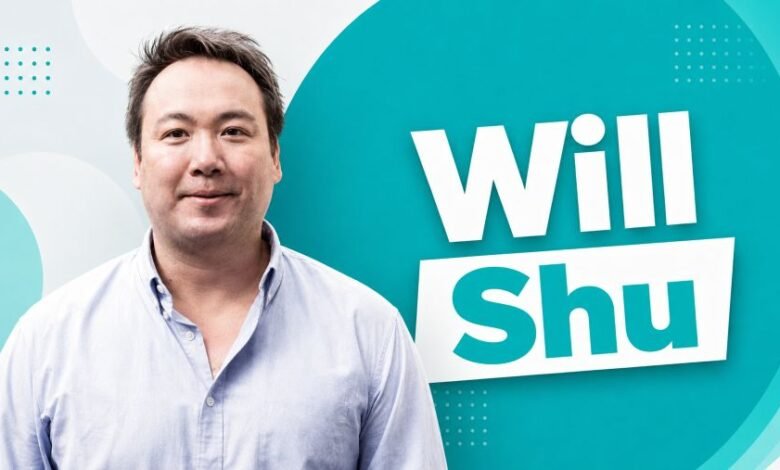
Last Updated on July 26, 2026 by Business Blog Media Editorial Team
Introduction
Will Shu is an American entrepreneur and former investment banker best known for co-founding Deliveroo, one of the world’s most recognised food-delivery platforms.
He started the company in London with software engineer Greg Orlowski in 2013. Shu developed the idea after noticing that many good London restaurants did not offer delivery, especially during late working hours.
He became Deliveroo’s first rider, delivered orders himself and used those experiences to improve the service. The company later expanded internationally, joined the London Stock Exchange and became part of DoorDash.
As of July 2026, Shu is no longer the chief executive of Deliveroo. He stepped down when DoorDash completed its acquisition of the company on 2 October 2025. His latest verified public status is Deliveroo co-founder and former CEO.
Will Shu Quick Facts
| Fact | Verified information |
|---|---|
| Full registered name | William Hsiang Shu |
| Public name | Will Shu |
| Born | December 1979 |
| Birthplace | Connecticut, United States |
| Nationality | American |
| Profession | Entrepreneur and former investment banker |
| Known for | Co-founding Deliveroo |
| Deliveroo co-founder | Greg Orlowski |
| Deliveroo founded | 2013 |
| Former position | Founder and CEO of Deliveroo |
| Education | Northwestern University and the Wharton School |
| Current public status | Deliveroo co-founder and former CEO |
Who Is Will Shu?
Will Shu is the entrepreneur who helped turn a personal frustration into an international delivery business.
Before creating Deliveroo, he worked in finance. Long working hours often meant that he needed food delivered to his office. This was easy in New York, where many restaurants offered late-night delivery.
When he moved to London, he noticed a clear difference. The city had many excellent restaurants, but a large number of them did not have their own delivery workers or systems.
Shu believed technology could connect three groups:
- Customers who wanted convenient delivery
- Restaurants that wanted to reach more people
- Riders who could transport orders
This simple connection became the foundation of Deliveroo.
Early Life and Education
William Hsiang Shu was born in Connecticut in December 1979 and grew up in the United States.
He attended Northwestern University and completed his undergraduate studies in 2001. After university, he entered the financial industry.
Shu later studied at the Wharton School of the University of Pennsylvania. He completed his MBA in 2012.
His time at Wharton was important because it gave him an opportunity to develop and test his delivery-business idea. The early Deliveroo concept gained support through a Venture Implementation class at the business school.
His education provided knowledge of finance, planning, company operations and business growth. However, much of his practical understanding came from working directly with restaurants, riders and customers.
Will Shu’s Career Before Deliveroo
Shu began his professional career in investment banking.
He worked in New York before moving to London in 2004 as part of his work with Morgan Stanley. Investment banking often involved long days and late nights.
While working in New York, ordering a good meal to the office was normal. When he reached London, he discovered that the choice was much more limited.
Many restaurants made excellent food but could not deliver it because they did not employ drivers. Customers could only order from the smaller group of restaurants that managed their own delivery operations.
Shu recognised that the problem was not a lack of food or customer demand. The missing part was a reliable delivery network.
He later worked in other finance-related positions before returning to the United States for his MBA.
How Did Will Shu Start Deliveroo?
Will Shu founded Deliveroo with his childhood friend Greg Orlowski in 2013.
Orlowski was a software engineer who could help build the technology behind the service. Shu concentrated on restaurants, riders, customers and the daily operation of the company.
The business started on a very small scale. Only a few restaurants joined the platform during its earliest stage.
Shu did not manage the company only from an office. He became its first delivery rider.
During the first year, he regularly:
- Collected meals from restaurants
- Delivered orders to customers
- Answered customer-service calls
- Recruited restaurant partners
- Tested the company’s technology
- Studied delivery times
- Solved problems with orders
- Made product decisions
Working as a rider helped him understand what happened outside the computer system. He could see how long restaurants needed to prepare food, how riders used the application and what customers expected when an order arrived.
His journey reflects several of the five Ps of entrepreneurship, including planning, people, profit, passion and perseverance.
What Made Deliveroo Different?
Traditional takeaway restaurants usually employed their own delivery drivers.
This system worked for businesses that received many delivery orders. However, it was expensive and difficult for restaurants that mainly served customers inside their buildings.
Deliveroo offered another model.
The platform handled important parts of the process, including:
- Showing restaurant menus to customers
- Receiving and processing orders
- Connecting orders with available riders
- Following the delivery journey
- Supporting digital payments
- Helping restaurants reach new customers
Restaurants could offer delivery without creating a complete delivery department of their own.
Customers gained access to meals from restaurants that had previously been unavailable for home delivery.
This model became especially useful as smartphones, digital payments and location technology became more common.
How Deliveroo Grew
Deliveroo began in London but did not remain a small local service.
The business attracted customers, restaurants, riders and major investors. It expanded into cities across Europe, Asia and the Middle East.
Several factors supported its growth:
- More people were using smartphones
- Customers wanted faster and easier services
- Restaurants wanted additional sales
- Digital payments were becoming normal
- Location technology improved delivery tracking
- Investors were supporting technology platforms
- Demand for home delivery was increasing
The company also moved beyond restaurant meals.
It began delivering groceries, household goods and other retail products in selected markets. These services helped Deliveroo become a wider local-commerce platform rather than only a takeaway application.
Important Deliveroo Milestones
2013: The Company Started
Will Shu and Greg Orlowski founded Deliveroo in London.
The platform began with only a small number of restaurants. Shu worked as its first rider while helping to manage every major part of the young company.
2015: International Expansion
Deliveroo expanded outside the United Kingdom into markets including France, Belgium and Ireland.
This stage showed that the company’s technology and delivery model could work in different cities and countries.
2021: London Stock Exchange Listing
Deliveroo began trading on the London Stock Exchange’s Main Market on 31 March 2021.
The listing raised approximately £1.5 billion in net proceeds for the company. It was one of the most closely watched UK technology listings of the period.
However, Deliveroo’s share price fell sharply on its first trading day. The difficult market debut became one of the most public challenges of Shu’s leadership.
2023: Workforce Restructuring
Deliveroo announced plans to reduce its workforce in 2023.
Shu accepted responsibility for hiring too quickly during the rapid delivery growth connected with the COVID-19 period. He explained that the company had expected the stronger level of growth to continue for longer.
The decision showed that fast-growing companies sometimes need to change their plans when customer behaviour and economic conditions change.
2024: First Full-Year Profit
Deliveroo reported its first full-year profit for 2024.
This was an important change because the company had spent many years investing heavily in expansion, technology, marketing and operations.
The result showed that Deliveroo had moved closer to becoming a financially sustainable platform.
2025: DoorDash Acquisition
DoorDash agreed to acquire Deliveroo in a transaction valuing its issued and expected share capital at approximately £2.9 billion.
The acquisition officially became effective on 2 October 2025. DoorDash confirmed the completed deal in its official acquisition announcement.
At the time, Deliveroo worked with approximately 176,000 restaurants, grocery businesses and retail partners. It also worked with more than 130,000 riders and had served around seven million monthly active consumers during 2024.
Why Did Will Shu Leave Deliveroo?
Shu announced that he would step down when the DoorDash acquisition was completed.
He had spent approximately 13 years creating and leading the company. In his departure message, he explained that he believed the time was right to leave and consider his next challenge.
His resignation became effective on 2 October 2025, the same day the acquisition was completed.
This means he should not be described as Deliveroo’s current CEO.
As of July 2026, his accurate public description is:
Will Shu is the co-founder and former chief executive of Deliveroo.
Miki Kuusi was publicly identified as Deliveroo’s CEO and head of DoorDash International in February 2026.
What Is Will Shu Doing Now?
Shu’s latest clearly verified major position is his former role as Deliveroo’s founder and CEO.
He has not publicly announced another operating position equal in size or importance to his Deliveroo role.
His departure statement suggested that he planned to consider a new challenge after leaving the company. Any future business, investment or leadership position should only be reported after a reliable public announcement.
Will Shu’s Leadership Approach
Shu’s leadership was strongly connected to direct experience.
Instead of studying the delivery process only through reports, he worked as a rider. This allowed him to understand the service from ground level.
His approach provides several simple business lessons.
Understand the Real Problem
Shu did not begin with technology and then search for a use for it.
He first identified a real problem: good restaurants wanted additional customers, but many could not manage delivery themselves.
Test the Service Personally
By completing deliveries, he could see problems that might not appear in company data.
He learned about restaurant waiting times, rider difficulties, customer expectations and application problems.
Begin With a Small Market
Deliveroo did not launch everywhere at once.
It started with a few restaurants in a limited part of London. The team could test the service, learn from mistakes and improve the system before expanding.
Use Technology to Connect Existing Needs
Deliveroo did not create restaurants, food demand or transport.
It used technology to connect these existing parts in a more organised way.
Change When Conditions Change
The company added grocery and retail delivery as customer needs developed.
It also reduced costs and changed its workforce when rapid growth slowed.
Know When to Leave
Founders do not always remain chief executive forever.
Like other founders who built major UK companies, Shu eventually moved away from daily leadership after years of expansion.
What Challenges Did Will Shu Face?
Deliveroo’s growth brought major opportunities, but it also created difficult questions.
Heavy Competition
The company competed with large platforms such as Uber Eats and Just Eat.
These businesses spent heavily on technology, promotions, customer growth and restaurant partnerships.
Profitability
Delivery platforms are expensive to operate.
They need technology, customer support, marketing, payment systems and large rider networks. Deliveroo spent years focusing on growth before reporting its first full-year profit.
Rider Working Status
The legal and working status of delivery riders became a major public issue.
Deliveroo treated riders as self-employed workers who could choose when to work. Trade unions and campaigners argued that riders needed stronger employment protections.
A UK Supreme Court case in 2023 concerned whether a defined group of Deliveroo riders had an employment relationship for collective-bargaining rights. The court dismissed the union’s appeal.
The decision concerned the legal position of the riders and the company. It was not a personal legal ruling against Shu.
Difficult Stock-Market Debut
Deliveroo’s 2021 stock-market listing attracted heavy criticism after its shares fell on the first day.
Although the listing raised significant money for the company, the share-price performance affected public confidence and became an important part of Deliveroo’s financial story.
Why Is Will Shu Important in Business?
Will Shu is important because he helped change how restaurants and customers think about delivery.
Before platforms such as Deliveroo became common, delivery was mainly controlled by individual restaurants. A restaurant normally needed its own drivers, telephone system and delivery process.
Deliveroo offered shared delivery infrastructure through one digital platform.
This approach helped create a wider market for:
- Restaurant delivery
- Grocery delivery
- On-demand retail
- Independent courier work
- Location-based ordering
- Digital restaurant services
His story is also a clear example of problem-based entrepreneurship. He experienced a difficulty, studied why it existed and created a service designed to solve it.
Interesting Facts About Will Shu
- His registered full name is William Hsiang Shu.
- He worked in investment banking before becoming an entrepreneur.
- The idea for Deliveroo came partly from his difficulty finding quality late-night delivery food in London.
- His childhood friend Greg Orlowski helped him create the company.
- Shu became Deliveroo’s first delivery rider.
- He worked as a rider while also managing customers, restaurants and company technology.
- The early Deliveroo idea was developed during his time at Wharton.
- Deliveroo joined the London Stock Exchange in 2021.
- The company reported its first full-year profit for 2024.
- He left the chief executive position when DoorDash completed its acquisition in October 2025.
Frequently Asked Questions
Who is Will Shu?
Will Shu is an American entrepreneur and former investment banker. He is best known for co-founding Deliveroo with Greg Orlowski in 2013.
What is Will Shu’s full name?
His registered full name is William Hsiang Shu.
When was Will Shu born?
He was born in December 1979 in Connecticut, United States.
What is Will Shu famous for?
He is famous for creating and leading Deliveroo, an international food, grocery and retail delivery platform.
Did Will Shu create Deliveroo alone?
No. He co-founded the company with his childhood friend and software engineer Greg Orlowski.
Was Will Shu a Deliveroo rider?
Yes. He was the company’s first rider and completed deliveries during its early period.
Why did Will Shu start Deliveroo?
He noticed that many good London restaurants did not offer delivery. He believed a technology platform and shared rider network could connect those restaurants with customers.
Where did Will Shu study?
He studied at Northwestern University and later completed an MBA at the Wharton School of the University of Pennsylvania.
Is Will Shu still the CEO of Deliveroo?
No. He stepped down when DoorDash completed its acquisition of Deliveroo on 2 October 2025.
Who owns Deliveroo now?
Deliveroo has been owned by DoorDash since the acquisition became effective in October 2025.
What is Will Shu doing now?
His latest verified major public status is Deliveroo co-founder and former CEO. A new major operating role has not been publicly established through the reliable information used for this article.
Conclusion
Will Shu turned a common problem into a large international company.
His experience as a busy investment banker helped him recognise that London had excellent restaurants but limited delivery choices. He then worked with Greg Orlowski to create a platform connecting customers, restaurants and riders.
Shu did not only direct the business from an office. He delivered orders himself, listened to customers and studied how the service worked in real conditions.
Deliveroo grew from a small London operation into a global delivery platform. It entered international markets, joined the London Stock Exchange, reached its first full-year profit and was acquired by DoorDash.
Shu’s journey shows that a strong business idea often begins with a simple question: what problem are people facing, and how can it be solved more effectively?