Set Up a Limited Company in the UK: What You Need to Know
Starting a UK limited company involves more than choosing a name. Here is how registration, directors, shares, tax, banking, Companies House filings, and yearly duties work in 2026.

Last Updated on October 1, 2026 by Business Blog Media Editorial Team
Setting up a limited company can look confusing.
Honestly, it is manageable.
You need the right details first. Then you register the company, keep proper records, handle tax, and meet Companies House deadlines.
The rules matter, though.
A limited company is legally separate from its owner. That changes how money, debts, tax, and business records are handled.
This article explains how to set up a limited company in the UK, what it costs, what documents you need, and what happens after registration.
Quick Facts
| Detail | Information |
|---|---|
| Main company type | Private company limited by shares |
| Minimum directors | 1 |
| Minimum shareholders | 1 |
| Director minimum age | 16 |
| Online Companies House registration fee | £100 |
| Registered office required | Yes |
| Registered email required | Yes |
| Identity verification | Required for relevant directors and PSCs |
| Corporation Tax main rate | 25% |
| Small profits Corporation Tax rate | 19% |
| VAT registration threshold | £90,000 |
| Confirmation statement | Usually every 12 months |
| Online confirmation statement fee | £50 |
What Is a Limited Company?
A limited company is its own legal entity.
That point matters.
The company can earn money. It can own assets. It can sign contracts. It can employ people and owe debts.
The owner’s personal finances are separate.
For a standard company limited by shares, shareholders usually have liability limited to the amount linked to their shares.
That does not mean every personal risk disappears.
A director can still become personally responsible in certain cases, such as giving a personal guarantee or breaking legal duties.
Should You Set Up a Limited Company?
A limited company can work well for many businesses.
Common examples include:
- consultants
- agencies
- online businesses
- publishers
- ecommerce businesses
- software companies
- trades
- contractors
- local service businesses
- growing startups
It may also make ownership easier.
Shares can be divided between founders or investors.
Still, an Ltd company brings more paperwork than sole-trader work.
You will normally deal with Companies House filings, company accounts, Corporation Tax, business records, and possibly payroll or VAT.
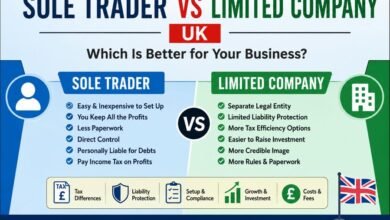
Limited Company vs Sole Trader
The difference is pretty simple.
A sole trader and the business are not separate legal entities in the same way.
A limited company is separate.
| Point | Limited Company | Sole Trader |
|---|---|---|
| Separate legal entity | Yes | No |
| Companies House registration | Yes | No |
| Corporation Tax | Yes | No |
| Annual company accounts | Yes | No Companies House accounts |
| Shares | Yes | No |
| Public company record | Yes | Limited |
| Administration | Higher | Lower |
| Liability | Usually limited | Usually personal |
Neither structure is right for everyone.
Your income, risk, costs, growth plans, and business type can affect the choice.
Choose Your Company Type
Most commercial UK companies use:
Private company limited by shares
This structure has shareholders.
The shareholders own shares in the company.
There is another common structure:
Private company limited by guarantee
That type is often used by clubs, associations, community groups, and some non-profit organisations.
For a normal profit-making business, limited by shares is usually the relevant option.
How Many Directors Do You Need?
A private limited company needs at least one director.
That director must normally be:
- at least 16 years old
- legally allowed to act
- not disqualified from being a director
The director does not have to live in the UK.
One person can handle several roles.
For example, you can be:
- the only director
- the only shareholder
- the main PSC
A private limited company does not usually need a company secretary.
Companies House Identity Verification
Identity checks are now a major part of company registration.
Companies House identity verification became a legal requirement for relevant directors and People with Significant Control under the newer company-registration system.
A director may need a Companies House personal code.
That code can then be used during company formation or appointment.
Basically, old company-formation tutorials may miss this requirement.
Use current Companies House guidance.
Identity can usually be verified through GOV.UK One Login or through an authorised company service provider where available.
Choose Your Company Name
Your company needs an official registered name.
A normal private limited company name usually ends with:
Limited
or
Ltd
For example:
North Star Media Ltd
The name cannot simply copy an existing registered company.
Certain words also need approval.
Names suggesting links with government bodies or regulated activities can face restrictions.
Do another check too.
Look for trademarks.
A name being available at Companies House does not automatically mean you have the right to use it as a brand.
Choose a Registered Office Address
Every UK limited company needs a registered office.
It must be a physical address.
It also needs to be located in the correct UK jurisdiction where the company is registered.
For example, a Scottish company needs a Scottish registered office.
This address becomes public.
That catches people out.
If you use your home address, people may be able to see it on the Companies House register.
Some owners use an accountant, solicitor, or registered-office service instead.
Permission is still required.
The address must be suitable for receiving official company mail.
Add a Registered Email Address
Companies House also asks for a registered email address.
This is different.
The email address is not normally shown publicly.
Still, keep it active.
Companies House can use it for company communication.
Decide Who Owns the Company
A company limited by shares needs at least one shareholder.
The shareholder can also be the director.
A simple one-person company could issue:
1 ordinary share worth £1
That shareholder would own 100% of the issued shares.
Another company may issue 100 shares.
That can make ownership percentages easier to divide later.
For example:
- Person A: 60 shares
- Person B: 40 shares
That would normally mean 60% and 40% ownership if all shares carry equal rights.
Share structures can get more complex.
Different share classes may have different voting, dividend, or capital rights.
Professional advice can help if outside investors are involved.
What Is a Statement of Capital?
Companies limited by shares provide share information during registration.
This includes the company’s statement of capital.
It can show:
- number of shares
- share classes
- nominal value
- shareholder details
- rights attached to shares
Keep this accurate.
Changes to shares may create Companies House filing duties later.
People With Significant Control
A Person with Significant Control is commonly called a PSC.
A person may be a PSC if they:
- hold more than 25% of shares
- hold more than 25% of voting rights
- can appoint or remove most directors
- have certain other forms of significant control
Think about a one-owner business.
If one person owns all shares, that person will normally be the company’s PSC.
PSC details must be reported properly.
Identity verification also applies to relevant PSCs.
Pick the Correct SIC Code
A SIC code describes your business activity.
SIC means Standard Industrial Classification.
You select one or more codes when registering.
Examples cover industries such as:
- software
- publishing
- advertising
- retail
- consultancy
- construction
- property
- manufacturing
Pick a code matching what the company actually does.
You can add more than one where needed.
Memorandum of Association
The memorandum confirms that the original members agree to form the company.
For a normal online Companies House registration, this is usually created as part of the application.
You do not normally need to write one from scratch.
Articles of Association
The articles set rules for running the company.
They cover areas such as:
- director powers
- shareholder decisions
- voting
- shares
- distributions
Many small companies use the standard model articles.
That can be enough.
Businesses with investors or special share rights may need custom articles.
A shareholders’ agreement may also make sense in multi-owner companies.
How Much Does It Cost to Set Up a Limited Company?
The standard Companies House online incorporation fee is:
£100
That is the official online formation fee in 2026.
Older articles may show much lower figures.
Those figures are outdated.
Companies House also charges fees for other services.
The online confirmation statement fee is currently:
£50
Extra costs can include:
- accountant fees
- registered-office services
- company formation agents
- business banking
- bookkeeping software
- insurance
- licences
The real startup cost depends on your business.
How to Set Up a Limited Company Online
Here is the basic process.
1. Check the company name
Make sure it is available.
Check trademarks too.
2. Verify director identity
Complete required Companies House verification.
Keep the personal code safe.
3. Choose the registered office
Use a suitable UK address.
4. Add directors
At least one is required.
5. Add shareholders
At least one is required for a company limited by shares.
6. Declare PSCs
Provide accurate control details.
7. Add share information
Enter share classes and values.
8. Choose SIC codes
Use codes matching company activity.
9. Choose articles
Most simple businesses use model articles.
10. Submit the application
Pay the registration fee.
Companies House will review it.
If accepted, the company is incorporated.
Certificate of Incorporation
Once registered, Companies House issues a Certificate of Incorporation.
It confirms things such as:
- company name
- company number
- incorporation date
Keep this document.
Banks, payment providers, suppliers, and other organisations may ask for it.
Your Company Registration Number
Every incorporated company gets a registration number.
This number stays with the company.
Do not confuse it with:
- Corporation Tax UTR
- PAYE references
- VAT registration numbers
Those are separate.
Corporation Tax UTR
HMRC normally issues a Corporation Tax Unique Taxpayer Reference.
This is a 10-digit number.
It is normally sent to the company’s registered office.
Keep it private.
You may need it for Corporation Tax services and correspondence.
Tell HMRC When the Company Starts Trading
A newly formed company may initially be dormant.
Once it starts business activity, HMRC may need to know.
Trading can include:
- selling goods
- providing services
- earning income
- buying goods for resale
- carrying on commercial activity
HMRC generally expects notification within the relevant Corporation Tax registration period.
Do not register a company and then forget its tax status.
Corporation Tax Rates
UK companies pay Corporation Tax on taxable company profits.
The main Corporation Tax rate is:
25%
The small profits rate is:
19%
The small profits rate can apply where qualifying profits are £50,000 or less.
The main rate normally applies above £250,000.
Marginal Relief can apply between those levels.
Those thresholds can change where associated companies are involved.
Taxable profit is not the same as turnover.
That is a common mistake.
Open a Business Bank Account
Keep company money separate.
Really separate.
The company is its own legal entity.
A business bank account makes records much clearer.
A bank may ask for:
- Certificate of Incorporation
- company number
- director ID
- shareholder details
- PSC information
- company address
- business activity
- expected turnover
Avoid mixing daily personal spending with company transactions.
It creates messy records.
How Can a Director Take Money Out?
Company money does not automatically belong to the director.
There are several normal routes.
Salary
A director can receive salary.
PAYE and National Insurance rules may apply.
Dividends
Shareholders may receive dividends.
But dividends must normally come from available company profits.
Keep proper records.
This may include:
- dividend vouchers
- board records
- payment details
Business Expenses
A director can be reimbursed for legitimate business expenses.
Keep evidence.
Director’s Loan
Money taken outside normal salary, dividends, expenses, or repayments can create a director’s loan balance.
Tax rules can then apply.
Treat director withdrawals carefully.
VAT Registration
The VAT registration threshold is currently:
£90,000
The test generally looks at taxable turnover over a rolling 12-month period.
Registration can also become necessary where you expect taxable turnover to exceed the threshold within the relevant short period.
Some businesses register voluntarily.
Why?
They may want to reclaim eligible VAT on purchases or work mainly with VAT-registered clients.
But voluntary registration creates extra administration too.
The standard UK VAT rate is 20%.
Different rates apply to some goods and services.
PAYE and Employees
A company paying staff may need PAYE registration.
That can include director salaries.
Payroll duties may include:
- Income Tax deductions
- National Insurance
- reporting pay to HMRC
- payslips
- payroll records
Register before payroll starts where required.
Do not pay wages casually.
Run them through proper payroll.
Workplace Pensions
Auto-enrolment duties can apply when a company employs eligible workers.
Eligibility depends on factors including:
- age
- earnings
- UK work status
Special rules can apply to companies with directors only.
Check pension duties once you hire staff.
Employers’ Liability Insurance
Businesses with employees may need Employers’ Liability insurance.
The legal minimum cover is normally:
£5 million
Some businesses need other policies too.
Examples include:
- public liability
- professional indemnity
- cyber cover
- product liability
- business property cover
The right policy depends on the work.
Annual Accounts
A limited company normally prepares annual accounts.
First-year deadlines differ from later years.
For a private company, first accounts are generally due at Companies House within:
21 months after incorporation
Later annual accounts are normally due:
9 months after the financial year ends
Do not leave accounts until late.
Missing the deadline can trigger penalties.
Corporation Tax Deadlines
Corporation Tax has separate deadlines.
For many small companies:
Corporation Tax payment: 9 months and 1 day after the accounting period ends.
Company Tax Return: 12 months after the accounting period ends.
These dates are different.
So keep both.
Your Companies House filing deadline is separate again.
Confirmation Statement
Every company must normally send Companies House a confirmation statement at least every 12 months.
This checks company information.
It can include:
- directors
- registered office
- shareholders
- share capital
- SIC codes
- PSC details
You normally have 14 days after the end of the review period to file it.
The current online fee is £50.
File it even if nothing changed.
Keep Proper Company Records
Record keeping starts early.
Keep evidence of:
- sales
- expenses
- invoices
- receipts
- bank transactions
- assets
- liabilities
- payroll
- dividends
- director loans
- shareholders
- company decisions
Tax-related company records normally need to be kept for several years.
Six years is the standard HMRC rule in many cases.
Longer retention can apply in certain situations.
Late Filing Penalties
Late Companies House accounts can create automatic penalties.
For private companies, the standard late accounts penalties currently start at:
- up to 1 month late: £150
- 1 to 3 months late: £375
- 3 to 6 months late: £750
- more than 6 months late: £1,500
Penalties can double for repeated late filing.
Tax-return penalties are separate.
So are late-tax-payment consequences.
Keep Companies House Updated
Some changes need to be reported quickly.
Examples can include:
- new directors
- director resignations
- registered office changes
- PSC changes
- share changes
- company name changes
Do not simply wait for the next confirmation statement.
Certain changes have their own filing deadlines.
What Must Appear on a Company Website?
A limited company website should show key legal information.
This normally includes:
- registered company name
- company number
- registered office
- place of registration
Business letters and order forms also have disclosure rules.
Use the full legal company details.
A trading name alone may not be enough.
Data Protection and ICO Duties
Many businesses process personal data.
Examples include:
- customer names
- email addresses
- employee records
- payment information
- marketing data
- website analytics
UK data-protection rules can then apply.
Some businesses must also pay an ICO data-protection fee.
The exact obligation depends on what data the company handles.
Website owners may also need:
- privacy information
- cookie controls
- marketing consent systems
- secure data handling
Do not ignore this area.
Business Licences
Companies House registration does not give automatic permission to run every type of business.
Some sectors need extra licences.
Examples include areas such as:
- food
- alcohol
- transport
- childcare
- healthcare
- financial services
- security
- gambling
- waste handling
Check licensing rules before trading.
Can a Limited Company Be Dormant?
Yes.
A company can exist without actively trading.
That is usually called a dormant company.
But dormant does not mean forgotten.
Companies House filings still normally apply.
A dormant company usually needs:
- dormant company accounts
- confirmation statements
- updated company details
Once trading begins, HMRC requirements can change.
Can a Non-UK Resident Set Up a Limited Company?
A UK company director does not normally need to live in the UK.
That means overseas residents can form UK companies.
The company still needs an appropriate UK registered office.
Cross-border tax is different, though.
Your personal tax residence, company management, overseas activities, banking, and double-tax agreements may affect the position.
A UK company also does not automatically give someone the right to live or work in the UK.
Get specialist advice where international tax is involved.
Do You Need an Accountant?
An accountant is not automatically required.
You can handle company records yourself.
Many small companies do.
But an accountant can help with:
- Corporation Tax
- annual accounts
- payroll
- VAT
- dividends
- director loans
- tax planning
- bookkeeping
- share transactions
The director still carries legal responsibility for company compliance.
Hiring an accountant does not remove that duty.
Common Mistakes to Avoid
New directors often make simple mistakes.
Some become expensive.
Watch for these:
- mixing personal and company money
- missing annual accounts
- forgetting the confirmation statement
- paying dividends without available profits
- losing receipts
- ignoring VAT turnover
- using the wrong SIC code
- forgetting PSC updates
- ignoring identity verification
- paying salary without checking payroll duties
- treating company cash as personal money
- using a home address without knowing it becomes public
- assuming Companies House handles every tax duty
Good records fix many problems.
Start them from day one.
Is Setting Up a Limited Company Worth It?
It depends on the business.
A limited company offers a clear legal structure, limited liability in normal circumstances, share ownership, and a separate identity.
But there is more admin.
You must take deadlines seriously.
For a growing business, that trade-off can make sense.
For a very small side activity, another structure may sometimes be simpler.
Check the numbers first.
Final Thought
Setting up a limited company is not only about paying Companies House and getting a certificate.
That is the first part.
The real work comes after.
Keep company money separate. Track tax. File accounts. Update Companies House. Keep good records.
Basically, treat the company like a separate business from day one.
That makes everything easier later.
Frequently Asked Questions
How much does it cost to set up a limited company in the UK?
The standard Companies House online incorporation fee is £100 in 2026.
Can one person set up a limited company?
Yes. One person can normally be the sole director, sole shareholder, and PSC.
Do I need a UK address?
The company needs an appropriate registered office address in the UK jurisdiction where it is incorporated.
Does a director need to live in the UK?
No. A director does not normally need to be UK resident.
How long does company registration take?
Straightforward online applications can often be processed quickly, but Companies House does not guarantee that every application will be approved immediately.
Do I need a business bank account?
Company finances must be kept separate from personal finances. Using a dedicated business bank account is the normal and clearest way to do this.
When does a company need VAT registration?
VAT registration is generally required once taxable turnover passes the £90,000 registration threshold or when the forward-looking registration test is met.
What is a PSC?
A PSC is a Person with Significant Control. This can include someone owning more than 25% of shares or voting rights.
Does a dormant company still file accounts?
Yes. A dormant company normally still has Companies House filing duties, including dormant accounts and a confirmation statement.





One Comment