Cath Kidston: Career, Brand Story and What She Does Now
Cath Kidston built one of Britain's most recognisable lifestyle brands from a small London shop. Here is the story of her early life, design career, business growth and the independent ventures she runs today.

Last Updated on August 22, 2026 by Business Blog Media Editorial Team
Introduction
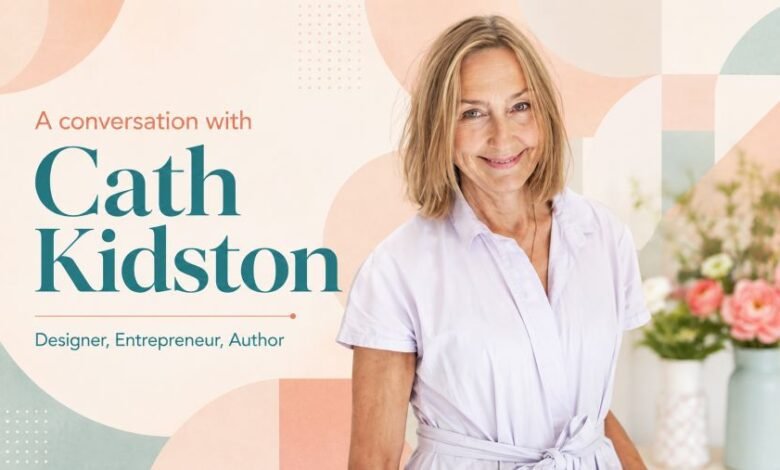
Cath Kidston is a British designer, entrepreneur and author best known for the colourful floral, polka-dot and vintage-inspired prints that turned her name into an international lifestyle brand.
She founded Cath Kidston in London in 1993, initially selling vintage fabrics, painted furniture and home accessories. What started as a small interiors business eventually expanded into fashion, bags, homeware, children’s products and stores around the world.
There is an important distinction for anyone searching for Cath Kidston today: the designer no longer owns or runs the Cath Kidston brand. Companies House records show that she resigned as a director in February 2016, while her current company, C.Atherley, explicitly states that she is no longer associated with Cath Kidston Limited or Cath Kidston-branded products.
She has since returned to independent design through Joy of Print and built a newer bath, body and home-fragrance business called C.Atherley.
Quick Facts About Cath Kidston
| Fact | Details |
|---|---|
| Full name | Catherine Isabel Audrey Kidston |
| Born | November 1958 |
| Age | 67 as of August 2026 |
| Nationality | British |
| Occupation | Designer, entrepreneur and author |
| Best known for | Founding the Cath Kidston lifestyle brand |
| Husband | Record producer Hugh Padgham |
| Honour | MBE for services to business |
| Current ventures | Joy of Print and C.Atherley |
Companies House confirms Kidston was born in November 1958, while the UK government’s 2010 honours record gives her full name as Catherine Isabel Audrey Kidston.
Who Is Cath Kidston?
Cath Kidston is one of the designers most closely associated with the revival of nostalgic British print in modern retail.
Rather than reproducing old-fashioned interiors exactly, she developed a visual language that took traditional motifs—particularly roses, spots and cheerful florals—and placed them on practical contemporary products.
That approach helped make items such as oilcloth bags, mugs, aprons, wallpaper and ironing-board covers instantly recognisable.
Her influence eventually extended far beyond home decoration. At its peak, the business carrying her name operated hundreds of shops internationally, with particularly strong demand in Asian markets.
Her career is also unusual because her story did not end when she left the company she founded. Kidston later returned to the smaller-scale creative work that originally attracted her to design.
Early Life and Family Influences
Kidston was born in November 1958 and grew up as one of four children in a family where houses, decoration and visual taste played an important role.
In a detailed profile, Vanity Fair described her mother as highly interested in the appearance of the family home and noted that Kidston’s paternal grandmother was an interior decorator. Her sister remembered Cath regularly rearranging her room and trying to personalise her surroundings as a child.
She has also described gardening as a long-standing source of inspiration. Plants, flowers, textiles, old houses and the visual character of traditional English interiors would later become recurring themes in her professional work.
Kidston’s father died while she was still a teenager. She has spoken about the effect that loss had on her outlook and career. A Guardian profile reported that his death prompted a period of uncertainty before her aunt, fashion designer Belinda Bellville, encouraged her to consider working in interiors.
Kidston has also discussed being dyslexic in interviews, explaining that her strengths were often more visual than academic.
Learning Interior Design With Nicky Haslam
One of Kidston’s formative professional experiences was working for British interior designer Nicky Haslam.
The job gave her exposure to professional decorating, sourcing, fabrics, colour and demanding clients. An Irish Times profile reported that she worked with Haslam for about four years and was given considerable responsibility while still relatively young.
She later went into business in interiors herself.
Before launching the Cath Kidston shop, she established McKinney Kidston, a specialist London interiors business. Her current Joy of Print biography identifies this as an important stage between working for Haslam and establishing the company that later made her internationally famous.
How Cath Kidston Started Her Famous Brand
Kidston founded her namesake business in 1993, opening a shop in London’s Holland Park area.
It was not initially designed as the beginning of a global retail chain.
Kidston later said that one of her biggest ambitions was simply to create a memorable shop and make enough money to pay her mortgage. During the early years she continued working as an interior decorator while buying stock for the shop at weekends.
The early shop mixed vintage wallpaper and textiles with painted furniture and decorative household items.
A major turning point came when Kidston began developing her own patterns.
She found an old rose wallpaper that captured the look she wanted but redrew it rather than simply reproducing the original. Vintage fabrics were another inspiration, but sourcing enough material consistently was difficult.
That problem encouraged her to create designs that could be manufactured in larger quantities.
One memorable early episode involved an order for rose-and-gingham fabric that unexpectedly arrived made into bedding. Rather than wasting it, Kidston repurposed the material into products including wash bags, coat hangers and ironing-board covers. The collection sold successfully and helped reveal the commercial potential of applying traditional prints to useful everyday objects.
Why the Cath Kidston Look Became So Recognisable
Kidston’s success came partly from understanding how traditional design could be updated without losing its character.
Her patterns drew on familiar British references—flowers, nursery prints, dots, birds and nostalgic domestic imagery—but the colours and applications often felt brighter and less formal than conventional country-house decoration.
The result occupied a useful space between traditional chintz and the minimalist interiors that became fashionable during the period.
Instead of treating pattern as something reserved for curtains or wallpaper, the business put it on objects people carried and used every day.
This made the brand highly visible. A customer carrying a floral Cath Kidston bag effectively carried the design identity outside the home.
The style was never universally loved, something Kidston herself acknowledged, but its recognisability became one of the company’s greatest commercial advantages.
Breast Cancer and a Change in Priorities
Kidston’s life changed significantly when she was diagnosed with breast cancer in her thirties.
In an interview with Vanity Fair, she said she had undergone a mastectomy after the disease was detected early. She later connected the experience with a greater willingness to take risks in her career.
More recent interviews have also addressed how cancer affected her plans to have children.
This period matters to her professional biography because it coincided with a shift from treating the shop as one part of her working life towards taking the growing business more seriously.
Marriage to Hugh Padgham
Cath Kidston is married to Hugh Padgham, the Grammy-winning record producer known for his work with musicians including Phil Collins, Genesis, Sting and The Police.
Their relationship began through Kidston’s work in interiors. She had originally decorated Padgham’s house before the friendship later developed into a relationship.
The couple remain together. In a 2024 interview, Kidston said that she and Padgham divide their time between London’s Notting Hill and their home near Stroud in Gloucestershire.
Her Gloucestershire home and garden have become important sources of inspiration for her more recent work.
From One Shop to an International Business
The company expanded rapidly during the 2000s.
Cath Kidston products moved into categories including bags, clothing, stationery, kitchenware, children’s products, bedding and accessories. International markets became increasingly important, especially Japan and other parts of Asia.
Private-equity investment accelerated that growth.
In 2010, TA Associates acquired a controlling stake, with reports at the time valuing the company at about £100 million.
By 2014, the company had 166 stores worldwide and turnover of about £144 million, according to reporting surrounding another investment transaction involving Baring Private Equity Asia.
These figures describe the value and performance of the business, not Cath Kidston’s personal wealth.
For that reason, precise online claims about Cath Kidston’s net worth should be treated cautiously. Her personal finances are private, and company valuations cannot simply be converted into an individual’s net worth.
When Did Cath Kidston Leave the Company?
Kidston gradually moved away from day-to-day control as outside investors and professional management became more important.
Companies House records show that she resigned as a director on 15 February 2016.
That date is essential when discussing the company’s later history.
The Cath Kidston retail business subsequently faced serious financial difficulties and entered administration in 2020. All 60 UK stores were closed as part of a rescue arrangement, with more than 900 jobs lost. Kidston herself was no longer running the company when this occurred.
In March 2023, Next plc acquired the Cath Kidston brand name, domain names and intellectual property. Next later confirmed the acquisition in its annual report and said Cath Kidston products would be sold through the Next website while the brand was rebuilt in the UK.
So Cath Kidston the person and Cath Kidston the brand should now be treated as separate subjects.
Joy of Print: Returning to Pattern Design
After leaving her namesake business, Kidston returned to hands-on creative work.
She founded Joy of Print in 2017.
The West London studio specialises in original hand-drawn surface patterns and works with other companies on fashion, homeware and collaborative projects.
Rather than operating a large retail chain, Joy of Print gives Kidston and her team a more concentrated role in illustration, print development and colour.
Its official biography says the studio has worked on projects ranging from babywear designs for Uniqlo to British textile and homeware collaborations.
C.Atherley: Cath Kidston’s New Business
Kidston’s most significant recent business is C.Atherley, a British bath, body and home-fragrance brand inspired by scented geraniums.
The idea developed after she left her original company and spent more time gardening at her Cotswolds home.
C.Atherley’s own history says Kidston began growing scented-leaf pelargoniums in a greenhouse and became interested in translating their fragrances into body and home products. The business was established in 2021.
As of 2026, C.Atherley is active and operates a flagship shop in London’s Connaught Village.
The company’s current website also provides perhaps the clearest statement about Kidston’s relationship with her former brand: she left her namesake company in 2016 and “is no longer affiliated or associated” with Cath Kidston Limited or its branded products.
MBE and Recognition
Kidston was appointed Member of the Order of the British Empire (MBE) in the 2010 New Year Honours.
The official government record describes her as founder and creative director of Cath Kidston and states that the honour was awarded for services to business.
The recognition reflected not just the popularity of her prints but the transformation of a small independent London business into an internationally recognised British retail brand.
What Is Cath Kidston Doing Now?
As of 2026, Kidston remains active in design and business.
Companies House lists her as an active director of Joy of Print Ltd, while Joy of Print describes her as the founder leading its small design team.
She is also the founder and creative force behind C.Atherley, which continues to develop bath, body and fragrance products based around botanical inspiration.
Her current work has effectively taken her back to where her career began: smaller creative businesses centred on drawing, interiors, colour, gardens and carefully developed products rather than managing a vast international retail organisation.
Trusted Resources
- GOV.UK New Year Honours 2010 — Confirms Kidston’s full name, MBE and recognition for services to business.
- Companies House — Confirms her November 1958 birth month, current Joy of Print directorship and February 2016 resignation from the Cath Kidston group.
- Joy of Print — Provides first-party information about her career history and current surface-design studio.
- C.Atherley — Confirms the origin of her newer company and her current lack of affiliation with the Cath Kidston brand.
- Next plc — Confirms Next’s 2023 acquisition of the Cath Kidston brand name and intellectual property.
- The Guardian and Vanity Fair — Provide contemporary reporting and interviews covering her early career, company growth and personal experiences.
Conclusion
Cath Kidston’s career is more than the story of a floral-print retailer. She began in interiors, found an underserved market for updated traditional patterns and turned a modest London shop into an internationally recognised business.
Her name remains attached to the retail brand she created, but she has not controlled that company since 2016. The Cath Kidston intellectual property now belongs to Next, while Kidston herself has moved on to Joy of Print and C.Atherley.
That distinction explains the most important part of her story today: she did not disappear after leaving her famous company. She returned to independent design and began building again on a smaller, more personal scale.
Frequently Asked Questions
Who is Cath Kidston?
Cath Kidston is a British designer, entrepreneur and author best known for founding the Cath Kidston lifestyle brand in 1993. Her colourful floral and vintage-inspired patterns became widely recognised across bags, homeware, clothing and accessories.
How old is Cath Kidston?
Cath Kidston was born in November 1958, according to Companies House records. She is 67 years old as of August 2026 and will turn 68 in November 2026.
Is Cath Kidston still the owner of Cath Kidston?
No. Cath Kidston left the company bearing her name in 2016 and is no longer affiliated with its branded products. Next plc acquired the Cath Kidston brand name, domains and intellectual property in March 2023.
Who is Cath Kidston’s husband?
Cath Kidston is married to British record producer Hugh Padgham. In a 2024 interview, she said they live between Notting Hill in London and their Gloucestershire home near Stroud.
What does Cath Kidston do now?
Kidston currently works through Joy of Print, the surface-design studio she founded in 2017, and C.Atherley, her geranium-inspired bath, body and home-fragrance company. Both ventures remain active in 2026.