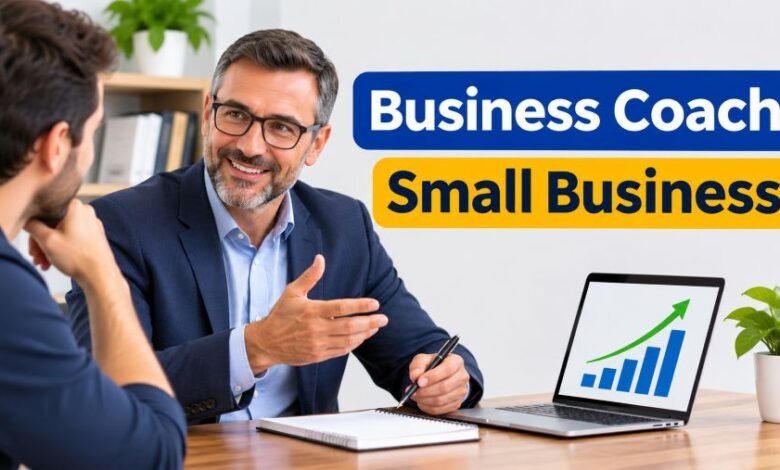
Small Business Coach: Services, Costs and Real Benefits
Learn how business coaching works, what small business owners can expect, and how to choose the right coach.

Last Updated on November 18, 2026 by Business Blog Media Editorial Team
Introduction
Running a small business isn’t always easy. Some days, everything works well. Other days, problems keep coming.
Sales might slow down. Expenses may keep rising. Managing employees can become stressful.
That’s where a business coach can help.
A business coach for a small business helps owners make better decisions. They discuss problems, review goals, and suggest ways to improve business management.
But coaching isn’t a magic fix. The owner still does the work.
So, what does a small business coach actually do? And is hiring one worth the money?
Here’s what business owners should know.
Quick Facts About Small Business Coaching
| Detail | Information |
|---|---|
| Service | Small Business Coaching |
| Main Purpose | Improving business decisions and performance |
| Best For | Business owners, entrepreneurs, startups |
| Main Services | Planning, sales, leadership, operations |
| Coaching Methods | Online, in-person, group, individual |
| Pricing | Depends on coach, location, and program |
| Common Focus | Growth, profit, management, accountability |
| Free Support | Available through selected mentoring programs |
| Main Goal | Helping owners manage their businesses better |
What Is a Small Business Coach?
A small business coach is a professional who works with business owners.
Their main job is simple. They help owners identify problems and find practical ways to deal with them.
Think about a small shop owner.
The shop gets regular customers. Sales seem good. Yet profits remain surprisingly low.
A coach may help review pricing, expenses, and daily operations. They can ask questions the owner hasn’t considered.
Sometimes, the problem isn’t sales. It could be poor stock management or rising costs.
A coach helps the owner understand those issues.
The business owner makes the decisions. The coach provides guidance and accountability.
What Does a Business Coach Do?
Business coaches work across different areas. Their services depend on client needs.
Business Planning and Strategy
Many owners have big ideas. Turning those ideas into plans takes work.
A business coach can help set realistic targets, identify business priorities, and review progress.
They may also help owners decide which projects deserve attention.
Sales and Marketing Support
Getting customers can be tough. Keeping them matters just as much.
Coaches may review marketing plans, customer relationships, and sales processes.
For example, a business might attract plenty of website visitors. Yet very few people buy anything.
A coach could help identify questions worth testing, such as pricing, product information, or the checkout experience.
Specialist marketing work may require a consultant.
Financial Planning and Cash Flow
Revenue doesn’t always mean profit. A business can sell more while earning less.
Coaches can help owners understand their financial reports, set budgets, and monitor spending.
They may also encourage regular cash flow reviews.
Still, business coaches aren’t automatically qualified accountants. Tax, audit, and regulated financial matters need suitable professionals.
Leadership and Team Management
Managing people takes different skills.
A small business coach may help owners improve communication, delegate responsibilities, and handle workplace decisions.
This support becomes useful as teams grow.
Productivity and Time Management
Many small business owners work long hours. Yet important tasks remain unfinished.
A coach can help review daily routines.
The aim is better time management. Owners learn which tasks need personal attention and which can be delegated.
Types of Business Coaching for Small Businesses
Not every business needs similar support.
Some owners need startup guidance. Others need help managing established companies.
| Coaching Type | Main Focus |
|---|---|
| Startup Coaching | Business ideas and launch planning |
| Growth Coaching | Expansion and revenue planning |
| Sales Coaching | Sales techniques and customer relationships |
| Marketing Coaching | Marketing plans and customer acquisition |
| Leadership Coaching | Team management and communication |
| Financial Coaching | Budgeting and financial awareness |
| Operations Coaching | Daily processes and business systems |
| Executive Coaching | Leadership decisions and performance |
| Group Coaching | Shared learning with other owners |
| Ecommerce Coaching | Online selling and customer retention |
Choosing the right type matters.
A new online shop may need ecommerce support. A growing local company might need leadership coaching.
How Does Small Business Coaching Work?
Most coaching relationships begin with a conversation.
The coach asks about business goals, current problems, and expected results.
Then both sides agree on priorities.
First Meeting: Understanding the Business
The coach learns about the business.
This may include reviewing products, customers, expenses, employees, and the owner’s main concerns.
The aim is identifying the actual problem.
Setting Business Goals
Next comes goal setting.
For example, an owner might want to improve profit margins or reduce unpaid invoices.
Good goals should be measurable.
Creating an Action Plan
The coach and owner agree on actions.
These could involve testing new prices, improving customer follow-up, or changing team responsibilities.
Each task should have a deadline.
Checking Progress
Regular meetings help maintain accountability.
The coach asks what worked, what failed, and what needs changing.
Progress should be measured against agreed goals.
Benefits of Hiring a Small Business Coach
Business coaching may offer several benefits. The results depend on the business and the coach.
Better Business Decisions
Owners sometimes make decisions under pressure.
An experienced coach can offer another perspective. They may help owners compare options before committing money.
Improved Business Focus
Small businesses usually have limited resources.
A coach can help owners decide which tasks matter most.
That can reduce wasted effort.
Stronger Leadership Skills
Business growth often means managing more people.
Coaching can help owners become clearer communicators and more confident decision-makers.
Better Accountability
Plans are easy to write. Following them can be harder.
Regular coaching meetings create opportunities to check promises and progress.
Support During Business Changes
Expansion brings new challenges.
Owners may need to hire workers, introduce systems, or manage larger expenses.
Coaching can support those decisions.
However, no coach can promise guaranteed profits or business success.
How Much Does a Small Business Coach Cost?
Coaching prices vary widely.
Location matters. Experience matters too. Group sessions usually cost less than individual programs.
For a UK example, ActionCOACH UK’s published 2026 pricing information lists these monthly ranges:
| Coaching Program | Published UK Monthly Range |
|---|---|
| Entry-Level Group Workshops | £200–£400 |
| Structured Group Coaching | £400–£800 |
| Premium Group Coaching and Mentoring | £800–£1,200 |
| One-to-One Business Coaching | £1,500–£3,000+ |
These are provider-published examples, not fixed UK market rates. Other coaches may charge different prices.
Business coaching costs also depend on session frequency, program length, and included services.
Before paying, check the contract.
Ask about extra charges, cancellation terms, and the number of sessions included.
The cheapest service isn’t automatically best. An expensive program isn’t automatically better either.
Business Coach vs Business Consultant vs Mentor
These roles sound similar. But their work can differ.
| Business Coach | Consultant | Mentor |
|---|---|---|
| Supports business owners | Solves defined business problems | Shares personal experience |
| Helps build management skills | Provides specialist recommendations | Gives practical guidance |
| Uses regular goal reviews | Often works on projects | May offer informal advice |
| Focuses on owner development | Focuses on specialist solutions | Focuses on learning |
For example, a coach may help an owner improve decision-making.
A consultant may build a new inventory system.
A mentor might share lessons from running a similar business.
Some professionals offer more than one service.
When Should You Hire a Business Coach?
Not every owner needs coaching immediately.
Still, certain problems deserve attention.
You might consider business coaching if:
- Business growth has slowed.
- You struggle to manage employees.
- Daily problems take too much time.
- You need clearer business goals.
- Sales are increasing, but profits aren’t.
- You want help planning expansion.
- You struggle to follow business plans.
- You need regular accountability.
But first, identify the problem.
If your business has serious financial trouble, professional financial advice may be more urgent.
How to Find a Good Business Coach
Finding a business coach takes research.
A professional website isn’t enough. Strong claims also need checking.
Check Their Business Experience
Ask about their previous work.
Have they managed a company? Have they coached businesses similar to yours?
Relevant industry knowledge can be useful.
Look at Qualifications
Professional coaching credentials provide another way to assess training.
The International Coaching Federation offers ACC, PCC, and MCC coaching credentials.
These have different training, experience, and assessment requirements.
Still, credentials alone don’t guarantee results.
Ask for Real References
Client feedback can provide useful information.
Ask whether previous clients can discuss their experience.
Check what the coach actually helped them achieve.
Understand Their Coaching Style
Some coaches focus on questions and accountability. Others combine coaching with advice and training.
Ask what each session includes.
Review the Complete Cost
Read payment terms carefully.
Check refund rules, minimum commitments, and any additional fees.
Avoid signing an expensive contract under pressure.
Warning Signs of a Poor Business Coaching Program
Some coaching offers make unrealistic promises.
The US Federal Trade Commission warns consumers about business coaching scams, including programs advertising guaranteed earnings or large returns with little effort.
Be careful when a provider:
- Guarantees unusually high profits.
- Pressures you to pay immediately.
- Refuses to explain its services.
- Hides extra charges.
- Uses earnings claims without reliable evidence.
- Promises business success without risk.
- Won’t provide clear contract terms.
Good coaching should involve realistic expectations.
If an offer sounds impossible, investigate before paying.
Online Business Coaching vs In-Person Coaching
Online business coaching has practical benefits.
Owners can attend sessions through video calls. This removes the need to travel.
It also makes remote coaches accessible.
In-person coaching offers different advantages. A coach may observe workplace operations directly.
Both methods can work.
The right choice depends on availability, costs, and the business problem.
Can Small Business Owners Get Free Coaching?
Yes, some support is free.
In the United States, SCORE provides free business mentoring through volunteer mentors.
The US Small Business Administration also works with resource partners, including Small Business Development Centers.
These services offer business advice and training. Some programs charge for certain services.
Free mentoring can be useful for owners with limited budgets.
Availability depends on location and eligibility.
How to Measure Business Coaching Results
Business coaching should have clear goals.
Owners need to know what’s changing.
Useful measures include:
| Business Area | What to Track |
|---|---|
| Sales | Revenue and conversion rates |
| Profit | Gross margin and operating profit |
| Customers | Repeat purchases and retention |
| Marketing | Customer acquisition cost |
| Finance | Cash flow and overdue invoices |
| Employees | Turnover and staff performance |
| Productivity | Time spent on important work |
| Operations | Errors and delivery times |
Compare results before and after coaching.
But avoid giving coaching credit for every improvement. Market conditions and other business changes also affect results.
Is a Small Business Coach Worth It?
That depends on your situation.
A business coach may be useful when you have clear goals but need support putting plans into action.
The coach should understand your needs. Their fees should also fit your budget.
Think about the expected value.
Will the coaching help solve a meaningful problem? Can you measure progress?
If the answers aren’t clear, try free mentoring first.
Business coaching is an option, not a requirement.
Final Thought
Running a small business involves constant decisions.
Some are easy. Others carry real financial risks.
A small business coach can provide guidance, accountability, and a fresh view of business problems.
But the right match matters.
Look for relevant experience and clear pricing. Set measurable goals before committing.
Good advice can help. The business owner still makes the difference.
Frequently Asked Questions (FAQs)
1. What does a small business coach do?
A small business coach helps owners review goals, improve management decisions, and handle business challenges. Services may cover sales, planning, leadership, and daily operations.
2. Is hiring a business coach worth the money?
It depends on the coach’s experience, fees, and your business needs. Coaching may be valuable when it supports measurable improvements.
3. How much do small business coaches charge?
Prices vary by location and service. Some coaches charge per session, while others offer monthly packages or group programs. Always request a complete quote.
4. Can a business coach help increase sales?
A coach may help improve sales planning, customer follow-up, and pricing decisions. However, higher sales are never guaranteed.
5. Do startup businesses need a coach?
Some startups benefit from coaching. Founders may need help with business planning, early customers, and management decisions. Free mentoring is another option.
6. Can I find a business coach online?
Yes. Many coaches offer video sessions and remote programs. Check their qualifications, experience, and contract terms before paying.
7. What’s the difference between business coaching and mentoring?
Coaching usually follows agreed goals and progress reviews. Mentoring often involves an experienced person sharing advice and lessons from their career.
8. How long should small business coaching last?
There is no fixed length. Some owners need short-term help with one problem. Others choose longer programs with regular reviews.