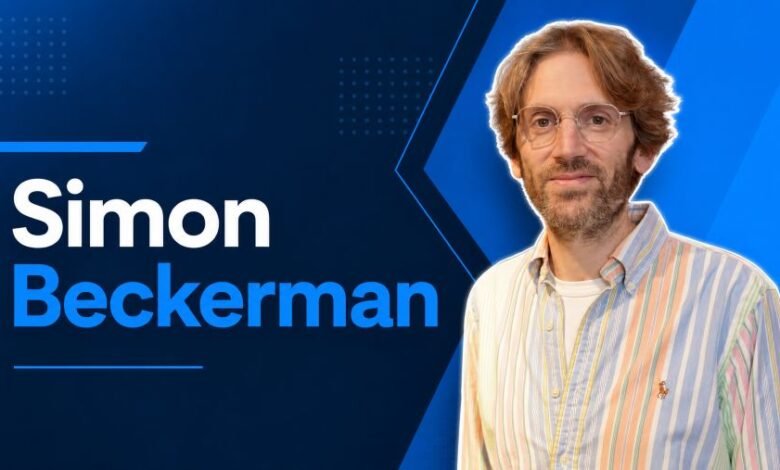
Simon Beckerman: The Founder Who Built Depop
How a creative idea from Milan became a global fashion marketplace and inspired a new business for independent food makers

Last Updated on July 27, 2026 by Business Blog Media Editorial Team
Introduction
Simon Beckerman is a British entrepreneur and designer best known for founding Depop, the social shopping platform for second-hand and vintage fashion.
He created Depop in 2011 after working in design, publishing and fashion. The platform allowed ordinary people to sell clothes through mobile profiles that looked and felt more personal than traditional online shops.
Depop later became especially popular with younger shoppers. Etsy acquired the company in 2021 for approximately $1.625 billion.
Beckerman later co-founded DELLI, an online marketplace that helps independent food and drink makers reach customers and trade buyers. As of July 2026, he remained an active director of the company, although its daily operations were led by chief executive Marie Petrovicka.
His career shows how a founder can take a simple idea, connect it with changing customer habits and build a platform used by millions of people.
Simon Beckerman Quick Facts
| Fact | Verified information |
|---|---|
| Full registered name | Simon Brian Beckerman |
| Born | April 1974 |
| Nationality | British |
| Profession | Entrepreneur, designer and investor |
| Best known for | Founding Depop |
| Depop founded | 2011 |
| Other major business | DELLI |
| Current verified position | Director of DELLI Limited |
| Previous creative projects | PIG magazine and RETROSUPERFUTURE |
| Main business sectors | Technology, fashion, online marketplaces and food |
Who Is Simon Beckerman?
Simon Beckerman is a business founder who has worked across design, publishing, fashion, technology and food.
He became internationally known after creating Depop, a mobile marketplace where people could buy and sell second-hand clothing.
Depop was different from many older selling websites. It combined shopping with features normally found on social-media platforms.
Users could:
- Create personal profiles
- Follow sellers
- Upload photographs
- Present products in a creative way
- Send messages
- Build their own audience
- Buy and sell through a mobile application
This made the platform feel more like a fashion community than a traditional classified advertisement website.
Beckerman was not only interested in technology. His earlier work in magazines, graphic design and fashion helped him understand how images, identity and personal style could influence online shopping.
Early Life and Creative Background
Simon Beckerman was raised in Milan, Italy. His mother was Italian, while his father was English.
Growing up in Milan placed him close to a city known around the world for fashion, design, publishing and creative culture.
His early working life included several different jobs. He earned money as a DJ at teenage parties and clubs. He also worked as a scooter delivery driver.
These roles were far removed from building a large technology company, but they gave him experience of youth culture, music and city life.
Beckerman later found work as a graphic designer. He also studied with the intention of becoming an industrial designer, although he did not complete the traditional university path.
He eventually created a graphic-design studio with his brother. They worked from their family home and produced posters, websites and other creative material.
This practical experience helped Beckerman learn how to turn visual ideas into products that people could understand and use.
Creating PIG Magazine
Before Depop, Beckerman helped create an independent publication called PIG, meaning People in Groove.
The magazine focused on subjects such as:
- Fashion
- Music
- Art
- Design
- Photography
- Underground culture
- New creative talent
PIG was not built like a traditional large publication. It was closely connected with independent artists, designers and people creating new cultural trends.
Working on the magazine helped Beckerman understand how young audiences discovered products and ideas.
He also noticed that stylists often bought unusual vintage clothing from markets and small independent sellers. These products had value, but there was no simple mobile system that brought them together for a wider audience.
That observation later became important to the development of Depop.
RETROSUPERFUTURE Eyewear
Beckerman and his brother also started the eyewear business RETROSUPERFUTURE in 2006.
The company became known for colourful and modern sunglasses influenced by fashion, art and street culture.
This project gave Beckerman further experience in product design, branding and international fashion.
He eventually stepped away from managing the eyewear company while his brother continued leading it.
The experience still played an important role in his business development. It showed him that customers did not buy products only because they were useful. They also bought items that helped them express personal identity.
That same understanding became central to Depop.
How Did Simon Beckerman Start Depop?
Simon Beckerman founded Depop in 2011.
The original idea was connected to PIG magazine. Beckerman wanted to create a mobile shop where readers could buy products featured in the publication.
However, gaining enough products directly from brands was difficult.
He changed the idea into a marketplace where users could upload and sell their own items. Instead of depending on one company’s stock, the platform could grow through its community.
This change transformed Depop from a magazine shop into a peer-to-peer marketplace.
The early platform was developed with support from H-FARM, an Italian technology and startup centre.
Depop later moved its main operations to London. The city provided access to investors, technology workers and a large international fashion market.
What Made Depop Different?
Depop arrived when smartphones were changing how people communicated, shared photographs and bought products.
Older online marketplaces often felt formal and heavily focused on written listings. Depop gave greater importance to images, personal profiles and creative presentation.
A seller could photograph an item, upload it from a phone and present it to followers. Buyers could discover products by exploring individual styles rather than searching only through fixed categories.
This model gave small sellers greater control over their image.
Some users treated their accounts like personal shops. They selected products, created photographs, communicated with buyers and developed recognisable styles.
The platform shared some ideas with online marketplaces that help independent sellers, but it was designed for a younger and strongly mobile audience.
Depop also benefited from several wider changes:
- Smartphones became more common
- Mobile payments became easier
- Social media influenced shopping habits
- Vintage fashion gained popularity
- People became more interested in reusing clothes
- Younger sellers wanted flexible ways to earn money
- Customers wanted products that felt personal and different
Beckerman recognised these changes early and brought them together in one service.
How Depop Grew
Depop started as a small project but developed into an international marketplace.
The company attracted users who wanted to sell vintage clothing, streetwear, designer products and personal fashion items.
Its community-based model helped it grow through photographs, recommendations, social sharing and word of mouth.
The platform expanded beyond Italy and the United Kingdom into markets including the United States and Australia.
Investment also supported its growth. Depop raised funding to hire workers, improve its technology, enter new markets and attract more buyers and sellers.
Beckerman stepped down as chief executive during the company’s earlier development and moved into a board position.
This change allowed other leaders to manage the next stage of growth.
Founders do not always remain the best people to operate a company at every stage. Starting a business requires experimentation and creative energy. Managing a large international organisation requires different systems, teams and leadership skills.
Beckerman’s decision reflects the path taken by other technology founders who solve everyday problems and later move away from daily management.
Why Was Depop Popular With Younger Shoppers?
Depop understood that shopping had become connected with identity and community.
Younger buyers were not always looking for the same products sold by large fashion companies. Many wanted vintage items, unusual clothing and pieces that reflected their individual style.
Depop gave them a place to discover these products.
The platform also allowed sellers to communicate directly with potential buyers. This created a more personal shopping experience.
Several features supported its popularity:
Mobile-First Design
Depop was designed around smartphone use. People could photograph, upload, discover and purchase products through one device.
Strong Visual Presentation
Large photographs made clothing the main focus. Sellers could build a recognisable visual style.
Social Features
Following accounts and interacting with sellers made the platform feel similar to a social network.
Opportunities for Small Sellers
Users did not need a physical shop or a large company. A phone, products and clear photographs could be enough to begin.
Interest in Second-Hand Fashion
Many shoppers wanted lower prices, unusual pieces or a way to give existing clothing a longer life.
These elements helped Depop become more than a selling application. It developed into a digital fashion community.
Etsy’s Acquisition of Depop
In 2021, Etsy agreed to acquire Depop for approximately $1.625 billion.
The transaction was a major business milestone for the platform and its investors.
Etsy said Depop had created a community-led marketplace with a strong position among younger fashion shoppers. The company confirmed that Beckerman had founded Depop in 2011 in its official acquisition announcement.
The price represented the value of the whole company. It should not be confused with Beckerman’s personal income.
Founders normally own only part of a company by the time it reaches a major sale. Investors, workers and other shareholders may also own shares.
Reports have discussed the amount Beckerman may have received, but a company’s sale value is not the same as a founder’s complete personal wealth.
Depop’s Planned Move From Etsy to eBay
In February 2026, Etsy agreed to sell Depop to eBay for approximately $1.2 billion in cash.
The agreement came almost five years after Etsy acquired the platform.
The UK Competition and Markets Authority cleared the planned transaction in July 2026.
As of July 27, 2026, Etsy said the sale was expected to close on July 30, subject to the remaining conditions.
Depop was expected to keep its name, platform, brand and community after joining eBay.
Beckerman was not leading Depop during this later ownership change. However, the transaction continued to show the long-term value of the marketplace he originally created.
Why Did Simon Beckerman Create DELLI?
After Depop, Beckerman turned his attention to independent food and drink makers.
He co-founded DELLI, a marketplace designed to help small producers present and sell their products.
The food industry has many independent makers creating sauces, snacks, oils, drinks, preserves and other products.
However, small producers can struggle with:
- Reaching enough customers
- Entering large shops
- Managing wholesale orders
- Presenting products professionally
- Building awareness
- Competing with established brands
- Finding suitable trade buyers
DELLI was designed to make discovery easier.
The platform uses strong product images, maker stories and carefully selected goods. This approach is similar to the way creative sellers present fashion products through modern online marketplaces.
Beckerman took lessons from Depop and applied them to a different industry.
How DELLI Works
DELLI connects independent food and drink brands with customers and business buyers.
The marketplace allows people to discover products that may not be widely available through large supermarkets.
It also provides a trade service for restaurants, shops and other businesses looking for independent products.
The platform focuses on small brands with clear identities and interesting products.
Its model supports both sides of the market.
Independent makers can gain:
- Greater visibility
- Access to new customers
- A professional sales platform
- Opportunities to receive wholesale orders
- Support with product discovery
Buyers can gain:
- Access to unusual products
- A simple way to discover small brands
- Greater product choice
- Direct information about makers
- Products not normally found in large stores
DELLI shows that Beckerman’s main business interest is not limited to clothing. He is interested in marketplaces that help creative producers reach larger audiences.
Is Simon Beckerman Still the CEO of DELLI?
Simon Beckerman is not DELLI’s day-to-day chief executive.
Marie Petrovicka, who had worked as the company’s chief operating officer, took over the chief-executive role in 2024.
Beckerman remained an active director of DELLI Limited as of July 2026.
He has continued to support the business while giving responsibility for daily operations to an experienced leader.
This is similar to his earlier experience at Depop. Beckerman appears most comfortable during the creative and early development stages of a business.
He identifies a problem, shapes the concept, develops the brand and helps establish the marketplace. A different leader can then build the systems needed for larger operations.
Simon Beckerman as an Investor
Beckerman has also become involved in startup investing.
He has publicly discussed backing a number of businesses and investment funds.
His experience can be useful to young founders because he understands several stages of company development, including:
- Developing an early idea
- Building a product
- Finding investors
- Creating a brand
- Entering new markets
- Changing the business model
- Appointing new leadership
- Selling a company
- Beginning another venture
Not every investment succeeds. Beckerman has openly acknowledged that some of the smaller companies he backed later closed.
This is an important part of startup investing. New companies can offer large opportunities, but they also carry serious risks.
What Entrepreneurs Can Learn From Simon Beckerman
Begin With a Real Observation
Depop was connected to real behaviour. Beckerman saw stylists buying vintage clothes and noticed that mobile technology could make these products easier to discover.
Change an Idea When Necessary
The first plan was to sell products connected to PIG magazine. When that model was difficult, the idea changed into a user-led marketplace.
Understand the Audience
Depop’s design matched the way younger people used smartphones, photographs and social platforms.
Give Users Control
Sellers could create their own profiles, photographs and shop identities. This encouraged creativity and personal responsibility.
Build Community, Not Only Technology
The application was important, but its value came from the people buying, selling and sharing products.
Accept Different Leadership Stages
A founder does not need to remain chief executive forever. Different stages of growth may require different types of leadership.
Use Experience in a New Industry
Beckerman did not simply create another fashion application. He applied his marketplace experience to independent food through DELLI.
Keep Testing New Ideas
His career includes magazines, design work, eyewear, fashion technology, food retail and investing. Each project added knowledge that could support the next one.
Why Is Simon Beckerman Important in Business?
Simon Beckerman helped show that online marketplaces could combine shopping, creativity and social interaction.
Depop allowed individuals to behave like small fashion businesses without opening physical shops.
The platform also gave second-hand clothing a modern digital identity. Instead of appearing old or unwanted, vintage and reused fashion could be presented as creative, personal and valuable.
His work is also important because it shows how ideas can move between industries.
The main principle behind Depop was helping independent sellers reach an audience through strong images and community discovery.
DELLI applies a similar principle to independent food producers.
This ability to reuse a successful business idea without simply copying the same product is one of the clearest features of Beckerman’s career.
Frequently Asked Questions
Who is Simon Beckerman?
Simon Beckerman is a British entrepreneur and designer best known for founding Depop, a mobile marketplace for second-hand and vintage fashion.
What is Simon Beckerman famous for?
He is famous for creating Depop in 2011 and helping develop its early marketplace model.
Did Simon Beckerman create Depop?
Yes. Beckerman founded Depop in 2011. The idea developed from his work with PIG magazine and his interest in mobile shopping.
Why did Simon Beckerman start Depop?
He originally wanted to create a mobile shop for products featured in PIG magazine. The concept changed into a peer-to-peer marketplace where users could sell their own clothing.
When did Etsy buy Depop?
Etsy completed its acquisition of Depop in July 2021. The transaction valued the company at approximately $1.625 billion.
Did Simon Beckerman receive the full Depop sale price?
No. The acquisition price represented the value of the whole company. It was not Beckerman’s personal payment.
Is Simon Beckerman still part of Depop?
He is Depop’s founder, but he does not hold its current daily leadership position.
What is DELLI?
DELLI is a marketplace for independent food and drink brands. It serves both individual customers and trade buyers.
Is Simon Beckerman the CEO of DELLI?
No. Marie Petrovicka became DELLI’s chief executive in 2024. Beckerman remained an active company director as of July 2026.
What other company did Simon Beckerman create?
Before Depop, he helped create PIG magazine and co-founded the RETROSUPERFUTURE eyewear brand.
Where did Simon Beckerman grow up?
He grew up in Milan, Italy, in a British-Italian family environment.
What business lessons can founders learn from him?
His career highlights the importance of observing real behaviour, changing weak ideas, understanding customers, building communities and appointing suitable leaders as a company grows.
Conclusion
Simon Beckerman is the entrepreneur who transformed a creative publishing idea into Depop, one of the world’s best-known fashion-resale marketplaces.
His background in design, music, publishing and eyewear helped him understand visual culture before he entered technology.
Depop succeeded because it gave ordinary sellers simple tools to create personal mobile shops. It connected second-hand fashion with social interaction, photography and individual style.
The company’s acquisition by Etsy in 2021 confirmed its value as a major international marketplace. Its planned move to eBay in 2026 shows that the platform remains commercially important many years after its creation.
Beckerman later used his marketplace experience to co-found DELLI, helping independent food and drink makers reach customers and business buyers.
His career demonstrates that strong businesses often begin with a simple question: what are people already trying to do, and how can technology make it easier?