Pavegen Systems Ltd: The Innovative UK Company Turning Footsteps Into Energy
How Pavegen’s smart flooring combines clean electricity, data, technology, and public engagement

Last Updated on July 22, 2026 by Business Blog Media Editorial Team
Introduction
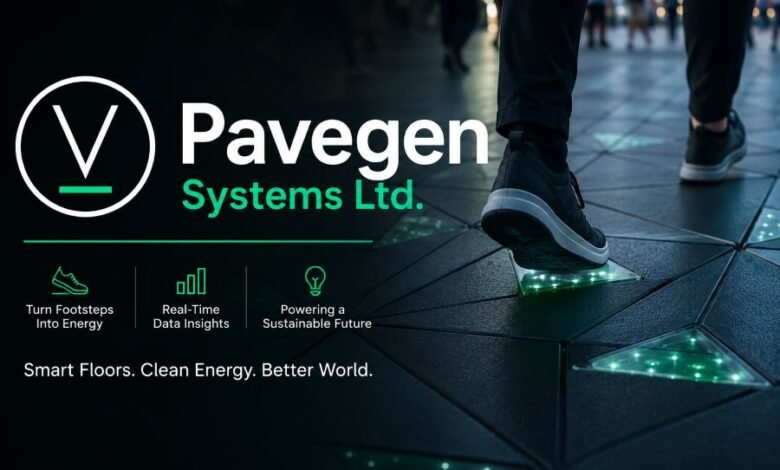
Pavegen Systems Ltd is a British technology company that creates special floor tiles capable of generating electricity when people walk on them.
Each footstep presses the tile down slightly. This movement activates a small generator inside the system and produces a limited amount of electricity. The floor can also collect footfall data and connect with lights, screens, games, and digital displays.
Pavegen does not claim that footsteps can replace solar farms, wind turbines, or normal electricity supplies. Instead, its technology is mainly designed for interactive public spaces, educational projects, smart cities, events, and brand campaigns.
Quick answer: Pavegen Systems Ltd is an active UK clean-technology company founded by Laurence Kemball-Cook. It is best known for kinetic floor tiles that turn human footsteps into small amounts of electricity and useful movement data.
Pavegen Systems Ltd Company Overview
| Company detail | Information |
|---|---|
| Legal name | Pavegen Systems Ltd |
| Company number | 06980029 |
| Founded | 2009 |
| Founder | Laurence Kemball-Cook |
| Headquarters | London, United Kingdom |
| Company type | Private limited company |
| Main industry | Clean technology and kinetic flooring |
| Main product | Footstep-powered smart floor tiles |
| Current status | Active |
| Main customers | Businesses, cities, airports, universities, and event organisers |
Pavegen Systems Ltd was incorporated in the United Kingdom on 4 August 2009.
The company remains listed as active on Companies House, the official UK register of companies.
What Is Pavegen Systems Ltd?
Pavegen Systems Ltd is a technology business that develops kinetic flooring.
The word “kinetic” relates to movement. Pavegen’s tiles use the movement created by a person’s footstep to operate a small electromagnetic generator.
The company’s system can perform three main functions:
- Generate small amounts of electricity
- Measure how many people walk across an area
- Create interactive experiences using lights, screens, sounds, or games
This combination makes Pavegen different from a traditional electricity company.
Its main commercial value does not come only from selling electricity. It also comes from helping organisations engage visitors, collect movement data, and show their environmental goals in a visible way.
Who Founded Pavegen?
Pavegen was founded by British entrepreneur Laurence Kemball-Cook.
He developed the idea after studying industrial design and technology at Loughborough University. During a work placement, he was asked to think about renewable lighting for busy public areas.
Solar power was not always reliable in locations with limited sunlight. This encouraged him to explore whether the movement of people could become another source of energy.
Kemball-Cook began testing different ideas before developing a floor tile that could produce electricity when stepped on. He launched Pavegen in 2009 and has continued to serve as its founder and chief executive.
His story shows how a simple observation can develop into an international technology business.
Readers interested in other British founders can also explore the story of Mary Perkins and the growth of Specsavers.
How Does Pavegen Flooring Work?
Pavegen flooring works through electromagnetic induction.
When a person steps on a tile, its upper surface moves down by a small amount. A mechanism beneath the surface changes this downward pressure into rotational movement.
That movement operates an electromagnetic generator, which produces electricity.
The electricity can be used immediately or stored in a battery for later use.
It may support small applications such as:
- LED lighting
- Digital displays
- Interactive games
- Mobile-device charging points
- Environmental sensors
- Public information screens
- Branded event experiences
The amount of electricity from one step is very small. However, the system can become more useful in busy areas where thousands of people walk every day.
Is Pavegen Piezoelectric?
Pavegen’s current technology should not simply be described as piezoelectric flooring.
Piezoelectric systems use materials that create an electrical charge when pressure is applied. Pavegen instead describes its system as using electromagnetic induction.
The tile converts the vertical movement of a footstep into rotational movement, which drives a generator.
This difference is important because many online articles incorrectly describe every footstep-powered floor as piezoelectric.
How Much Electricity Does One Pavegen Step Produce?
According to figures published by the company, an average adult step can generate approximately three to five joules of energy.
This is a very small amount of electricity.
One person walking across a few tiles cannot power a house, office, or large building. Even a busy installation normally produces far less electricity than a normal solar-energy system of a similar size.
Pavegen technology is therefore better suited to low-power and interactive uses.
For example, footsteps may activate lights around a walkway, display an energy score on a screen, or support a small digital game.
Can Pavegen Power a House?
Pavegen flooring is not designed to provide all the electricity required by a house.
A modern home uses energy for heating, cooling, lighting, cooking, appliances, and electronic devices. Footstep-powered tiles cannot continuously generate enough electricity for these needs.
Pavegen can support small features, but it is not a replacement for:
- Grid electricity
- Solar panels
- Wind turbines
- Battery-storage systems
- Large renewable-energy projects
Its strongest value comes from engagement, education, data, and visible sustainability.
What Products Does Pavegen Offer?
Pavegen has developed several products and services around kinetic energy and smart flooring.
Pavegen Kinetic Tiles
The company’s best-known product is its triangular kinetic tile.
These tiles can be placed together to create walkways and interactive floor areas. They can be installed permanently or used temporarily for exhibitions, sports events, and marketing campaigns.
The tiles may also be customised with different colours, logos, and designs.
Pavegen Solar+
Pavegen Solar+ combines solar-energy technology with kinetic flooring.
The solar surface can generate energy from sunlight, while the kinetic mechanism collects energy from footsteps. This allows the product to use two different forms of renewable energy.
The exact output depends on sunlight, location, installation size, weather, and foot traffic.
Walk to Light
Walk to Light is a self-contained interactive flooring product.
The tile lights up when someone steps on it. It can be used in public paths, exhibitions, play areas, and educational spaces.
The immediate lighting effect helps people understand the connection between their movement and the electricity being created.
Pavegen Software and Data
Pavegen also develops software that records and displays information from its flooring.
The system may measure:
- Total footsteps
- Installation activity
- Busy and quiet periods
- Energy generated
- Visitor participation
- Movement through a space
Businesses can display this information on screens or use it to understand how visitors interact with an area.
How Does Pavegen Make Money?
Pavegen mainly operates as a business-to-business technology company.
It may earn revenue through:
- Kinetic-flooring installations
- Product sales
- Temporary event projects
- Custom software
- Design and engineering services
- Data and analytics tools
- Maintenance services
- Technology licensing
- International partnerships
- Branded public experiences
Pavegen does not appear to publish standard prices for every product.
The final cost of a project may depend on its size, location, flooring design, software requirements, installation work, and length of use.
Like other specialist technology providers, Pavegen normally develops projects around the customer’s needs.
Another example of a company serving organisations through specialist technology is Dynamic Network Factory, which operates in business data storage and IT infrastructure.
Where Has Pavegen Been Installed?
Pavegen says its technology has been used in hundreds of installations across many countries.
Its projects have included:
- Airports
- Universities
- Shopping centres
- Offices
- Sports venues
- Public walkways
- Exhibitions
- Music events
- Smart-city developments
- Corporate sustainability campaigns
The company has worked on projects connected with major international brands and organisations.
Reported project names have included Google, Siemens, Adidas, Ford, Samsung, Volvo, HSBC, Barclays, IKEA, Intel, Mercedes-Benz, and UEFA-related campaigns.
However, these projects are not all the same.
Some are permanent installations, while others are temporary exhibitions or marketing events. A short event project should not be presented as a permanent customer relationship.
Why Do Companies Use Pavegen Flooring?
Businesses do not normally install Pavegen tiles only to reduce their electricity bills.
They use the system because it creates an experience that people can see, feel, and understand.
Public Engagement
People become part of the installation when their footsteps activate a light, screen, or game.
This makes the technology more memorable than a normal floor.
Sustainability Education
The system can teach visitors how movement may be converted into electricity.
Schools, universities, businesses, and city authorities can use it to encourage discussions about energy and sustainability.
Footfall Data
Pavegen flooring can measure how often people use an area.
This information may help organisations study visitor behaviour or measure participation in an event.
Brand Promotion
Companies can place their names, colours, and campaign messages on the tiles.
A visitor may walk across the floor, generate energy, and see the result on a branded display.
Off-Grid Features
The electricity can support small lights or sensors in places where a normal power connection may be difficult or unnecessary.
What Are the Benefits of Pavegen Technology?
Pavegen offers several potential benefits.
It Makes Clean Energy Visible
Solar panels and electrical systems often operate without direct public interaction.
Pavegen allows people to see an immediate result from their movement.
It Encourages Participation
Visitors do not only look at the technology. They physically interact with it.
It Combines Hardware and Software
The company provides both a physical flooring product and digital tools for collecting and displaying information.
It Can Be Customised
Tiles, lighting, software, and screens can be designed around a customer’s event or location.
It Works in Busy Public Areas
Airports, shopping centres, sports venues, and city walkways may provide the high foot traffic needed for effective interactive projects.
What Are the Limitations of Pavegen?
Pavegen is an interesting technology, but it also has clear limitations.
Low Energy Output
A single footstep produces only a small amount of energy.
The electricity generated may be useful for lights and displays, but it is normally not enough for heavy equipment or entire buildings.
Dependence on Foot Traffic
The system only produces kinetic energy when people step on it.
Output may fall during quiet periods, bad weather, holidays, or times when a location is closed.
Installation Costs
Specialist flooring, generators, software, batteries, and maintenance can make a project more expensive than an ordinary floor.
Limited Public Pricing
Customers normally need to request a quotation, making direct price comparisons difficult.
Environmental Questions
A complete environmental assessment should consider the materials, manufacturing, transport, installation, maintenance, and useful life of the tiles.
The electricity generated is only one part of the product’s total environmental effect.
Is Pavegen Systems Ltd a Legitimate Company?
Yes, Pavegen Systems Ltd is a legally registered and active British company.
Its official company number is 06980029, and it was incorporated in August 2009.
People researching the business should be careful not to confuse it with a separate company named Pavegen Limited. That separate legal entity used a different company number and was dissolved.
The active technology company discussed in this article is Pavegen Systems Ltd.
Its correct legal details are important when checking company records, investments, directors, or financial filings.
Has Pavegen Raised Investment?
Pavegen has raised money through private investment and crowdfunding campaigns.
Its funding has supported:
- Product development
- International expansion
- Engineering
- Software development
- Manufacturing partnerships
- Sales growth
- New kinetic and solar products
Crowdfunding has also given individual investors opportunities to purchase shares during selected campaigns.
However, investment in a private technology company can involve significant risk. Fundraising success does not guarantee future profits, dividends, or a successful sale of shares.
Is Pavegen Profitable?
Public information does not provide a simple and fully verified answer about Pavegen’s current profitability.
Small private companies do not always publish detailed revenue and profit information in the same way as large public companies.
Pavegen has announced revenue expectations, funding rounds, project pipelines, and international growth plans. However, management forecasts should not be treated as confirmed financial results.
The most reliable approach is to examine its latest filed accounts and clearly separate completed results from future expectations.
What Is the Future of Pavegen?
Pavegen’s future may depend on whether it can expand beyond individual custom projects.
Possible growth areas include:
- Smart cities
- International airports
- Sports venues
- Sustainable tourism
- Universities
- Interactive retail
- Corporate events
- Solar and kinetic hybrid flooring
- Software subscriptions
- Technology licensing
- Local manufacturing partnerships
Software and licensing could help the company create more regular revenue instead of depending only on individual flooring installations.
Its future success will also depend on cost, reliability, product lifespan, customer demand, and the measurable value delivered by each installation.
Frequently Asked Questions
What does Pavegen Systems Ltd do?
Pavegen Systems Ltd creates smart floor tiles that turn footsteps into small amounts of electricity. Its technology can also measure foot traffic and operate interactive displays.
Who owns Pavegen?
Pavegen is a privately held company with investors who have supported it through private funding and crowdfunding rounds. Laurence Kemball-Cook is its founder and chief executive.
Who invented Pavegen?
Laurence Kemball-Cook developed the original Pavegen concept and founded the company in 2009.
Is Pavegen a British company?
Yes. Pavegen Systems Ltd is registered in England and has its main office in London.
Can Pavegen tiles power a building?
Pavegen tiles cannot normally provide all the electricity required by a building. They are more suitable for lighting, sensors, displays, games, and interactive experiences.
Does Pavegen use piezoelectric technology?
Pavegen describes its current system as using electromagnetic induction rather than a simple piezoelectric mechanism.
How much energy does a Pavegen step generate?
The company says an average adult step may generate approximately three to five joules. Actual output can change according to the user, tile, and installation conditions.
Where is Pavegen used?
Pavegen flooring has been used in airports, universities, shopping areas, offices, sports events, exhibitions, and public spaces around the world.
Is Pavegen still active?
Yes. Pavegen Systems Ltd was listed as an active UK company as of July 2026.
Conclusion
Pavegen Systems Ltd is an innovative British technology company that turns footsteps into small amounts of electricity and useful movement data.
Its tiles cannot replace the electricity grid, solar farms, or wind power. Their main strength is creating a direct connection between people, movement, technology, and sustainability.
A person steps on the floor, the tile moves, electricity is produced, and an interactive feature responds. This simple experience can make energy technology easier for the public to understand.
Pavegen’s long-term opportunity may come from combining kinetic flooring with solar power, software, data, licensing, and international partnerships.
The company offers a creative example of how everyday human movement can become part of a larger smart-city and clean-technology experience.