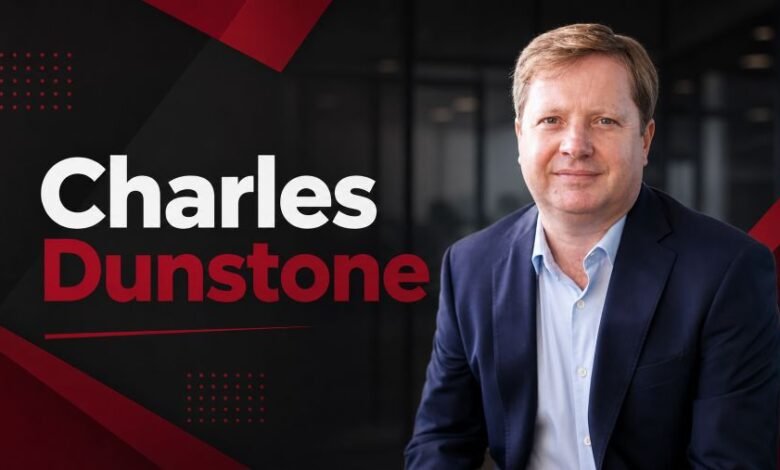
Charles Dunstone: The Founder Behind TalkTalk
How a British entrepreneur turned a small mobile-phone idea into Carphone Warehouse, TalkTalk and a long career in business investment

Last Updated on July 31, 2026 by Business Blog Media Editorial Team
Introduction
Sir Charles Dunstone is a British entrepreneur, investor and company chairman. He is best known for founding Carphone Warehouse and creating the broadband company TalkTalk.
He started Carphone Warehouse in 1989 with about £6,000 in savings. The business began from a small flat in Marylebone, London, when mobile phones were large, expensive and mainly used by big companies.
Dunstone believed ordinary people and small businesses would also want mobile phones. This simple idea helped him build one of Britain’s best-known telecommunications businesses.
As of July 2026, he is the Executive Chairman of TalkTalk Group. He also invests in growing consumer companies through Freston Ventures.
Charles Dunstone Quick Facts
| Fact | Verified information |
|---|---|
| Full name | Sir Charles William Dunstone CVO |
| Born | November 1964 |
| Nationality | British |
| Profession | Entrepreneur, investor and company chairman |
| Best known for | Founding Carphone Warehouse and launching TalkTalk |
| Carphone Warehouse founded | 1989 |
| TalkTalk launched | 2003 |
| Current main role | Executive Chairman of TalkTalk Group |
| Investment company | Freston Ventures |
| Major honours | Knighthood and Commander of the Royal Victorian Order |
Who Is Charles Dunstone?
Charles Dunstone is a British business founder who helped change the way people bought mobile phones and broadband services.
When he entered the mobile-phone industry, customers had limited choice. Phones were often sold directly to large companies, while ordinary consumers had fewer places to compare products and prices.
Dunstone created Carphone Warehouse to make mobile phones easier to understand and buy. The company offered different phones, networks and payment plans in one place.
His career later expanded into broadband, technology, retail, food, fashion and property services.
Like technology founder Brent Hoberman, Dunstone became known for spotting how new technology could change normal customer behaviour.
How Did Charles Dunstone Start His Career?
Dunstone attended Uppingham School. He later chose to enter the working world instead of following a traditional university path.
His early jobs were connected to technology sales. He worked for Torch Computers before joining NEC, where he sold computers and mobile phones.
This experience helped him understand an important market problem.
Mobile phones were becoming more useful, but the industry was mainly focused on large corporate customers. Small companies, self-employed workers and members of the public were not receiving the same level of service.
Dunstone believed this market would grow quickly. He left NEC and started his own company.
How Did Carphone Warehouse Begin?
Charles Dunstone founded Carphone Warehouse in 1989 when he was 25 years old.
He started the business with about £6,000 in personal savings. Its early operations were based in a flat on Marylebone Road in London.
The name “Carphone Warehouse” clearly explained the original business idea. At the time, mobile phones were commonly described as car phones because many devices were installed inside vehicles.
The word “warehouse” suggested wide choice and competitive prices.
Dunstone worked with David Ross, a school friend who used his financial experience to help develop the company. Together, they expanded the business as mobile-phone use increased.
Carphone Warehouse allowed customers to compare:
- Mobile-phone models
- Network providers
- Call plans
- Contract prices
- Accessories
- Customer-service options
This approach became more valuable as the telecommunications market grew.
Why Did Carphone Warehouse Become Successful?
Carphone Warehouse entered the market at the right time.
Mobile phones were changing from expensive business equipment into everyday consumer products. More people wanted personal phones, but many customers found the technology and pricing difficult to understand.
The company made the buying process simpler.
Instead of visiting one network provider, customers could compare several options inside the same shop. This gave them more choice and helped Carphone Warehouse build a trusted retail name.
The company expanded across Britain and later entered other European markets.
In 2000, Carphone Warehouse joined the London Stock Exchange. The flotation valued the business at about £1.7 billion.
This was a major moment in Dunstone’s career. A company that had started with a small amount of personal savings had become a large public business.
How Did Charles Dunstone Create TalkTalk?
The story of TalkTalk began when Carphone Warehouse acquired Opal Telecom in November 2002.
The acquisition gave the company the technology and network services needed to enter the home telecommunications market.
TalkTalk officially launched in 2003.
Its early offer was simple and disruptive. Customers using the service could make calls to other TalkTalk customers without paying additional call charges.
The company later expanded into broadband and became a major competitor to established British telecommunications providers.
According to the official TalkTalk Group leadership profile, Dunstone led TalkTalk’s separation from Carphone Warehouse in 2010.
TalkTalk then became an independently listed company.
What Was the Dixons Carphone Merger?
In 2014, Carphone Warehouse merged with Dixons Retail.
The combined company became Dixons Carphone. It brought together mobile-phone shops and major electronics brands, including Currys and PC World.
Dunstone became chairman of the merged company.
The deal reflected changes in customer shopping habits. Smartphones, computers, televisions and home technology were becoming more closely connected.
However, Dunstone left the Dixons Carphone board in April 2017. He decided to make TalkTalk his main corporate focus.
What Does Charles Dunstone Do Today?
As of July 2026, Charles Dunstone is the Executive Chairman of TalkTalk Group.
He is not the company’s chief executive. His work is focused on board leadership, investment and the group’s long-term direction.
TalkTalk Group currently operates through two main businesses:
TalkTalk
TalkTalk provides broadband and Wi-Fi services to households across the United Kingdom.
PlatformX Communications
PlatformX Communications, also known as PXC, supplies network and connectivity services to other broadband and technology providers.
Dunstone remains an important investor in the group following its move from public to private ownership.
His current leadership comes during a period of major change in the British broadband industry. Traditional copper networks are being replaced by faster full-fibre connections, while providers are competing on price, speed and customer service.
What Is Freston Ventures?
Freston Ventures is an investment business founded by Charles Dunstone and Roger Taylor.
It supports entrepreneurs who are trying to build strong consumer brands.
The company does more than provide money. Its team also offers experience in areas such as:
- Business strategy
- Financial planning
- Company operations
- Brand development
- Recruitment
- International growth
- Leadership
Dunstone uses knowledge gained from Carphone Warehouse and TalkTalk to support newer businesses.
Freston Ventures has invested in brands including Five Guys, ME+EM, Strike, Purplebricks, Chicken Shop and Nattergal.
This part of his career is similar to the work of British investor Luke Johnson, who has also helped develop companies in food, hospitality and consumer services.
What Is Charles Dunstone’s Connection to Five Guys?
Dunstone helped bring the American restaurant brand Five Guys to Britain and Europe.
The first British Five Guys restaurant opened in Covent Garden, London, in 2013.
The business grew by offering a simple menu based mainly on burgers, fries and milkshakes. Customers could also choose from many different toppings.
Dunstone and his investment partners helped the company open more restaurants across Britain and Europe.
Five Guys shows how his business interests moved beyond telecommunications. However, the main idea remained similar: find a clear customer offer and build it into a widely recognised brand.
What Is Charles Dunstone’s Business Strategy?
Dunstone’s career shows several clear business principles.
Identify a Customer Problem
Carphone Warehouse served consumers who wanted mobile phones but needed more choice and clearer information.
TalkTalk entered a market where many customers wanted simpler and more affordable telephone and broadband services.
Enter a Growing Market Early
Dunstone entered mobile-phone retail before personal mobile use became normal.
He also entered home broadband while internet access was becoming an important household service.
Keep the Main Offer Simple
Carphone Warehouse made phone comparison easier.
TalkTalk used clear pricing and free calls between its customers to attract attention.
Build Strong Management Teams
A founder cannot control every part of a growing company.
Dunstone worked with experienced financial, retail, technology and operations leaders as his businesses expanded.
Use Experience to Support Other Founders
Through Freston Ventures, he now helps entrepreneurs facing many of the same problems he experienced during the early years of Carphone Warehouse.
What Challenges Has Charles Dunstone Faced?
Dunstone’s companies have experienced growth, competition and serious business challenges.
The telecommunications industry changes quickly. New technology can make existing products less useful, while price competition can reduce company profits.
TalkTalk also faced a major cyberattack in 2015. Customer information was accessed, and the company later received a regulatory fine for security failures.
The incident damaged customer confidence and showed why companies must protect digital information carefully.
TalkTalk has also faced financial pressure, customer losses and strong competition from larger broadband providers and new full-fibre networks.
Dunstone has remained involved as chairman and investor while the group has worked through refinancing and business restructuring.
Charles Dunstone’s Honours and Charity Work
Charles Dunstone received a knighthood in 2012 for services to the telecommunications industry and charity.
In 2015, he was appointed Commander of the Royal Victorian Order, commonly shortened to CVO. The honour recognised his work with The Prince’s Trust, now called The King’s Trust.
He is also connected to the Dunstone Education Trust.
The trust is the main sponsor of Fulwood Academy in Preston, England. Its purpose is to support education and improve opportunities for young people.
These roles show that his public work has extended beyond company building and investment.
What Can Entrepreneurs Learn From Charles Dunstone?
Start With a Real Need
Carphone Warehouse did not begin with complicated technology. It began with a clear customer need for easier access to mobile phones.
Learn Directly From the Market
Dunstone understood the opportunity because he had already worked in technology and phone sales.
Direct industry experience can help founders see problems that other people miss.
Begin With Available Resources
He started with limited personal savings and a small working space.
A new company does not always need a large office or a huge team. It needs a clear idea, paying customers and careful control of money.
Change as the Market Changes
Dunstone moved from mobile-phone retail into calls, broadband, technology investment and consumer brands.
Long-term entrepreneurs often need to change direction as industries develop.
Invest in People as Well as Ideas
Freston Ventures focuses on supporting entrepreneurs, not simply buying parts of companies.
A promising idea usually needs strong leadership and practical support before it can become a major brand.
Frequently Asked Questions
Who is Charles Dunstone?
Charles Dunstone is a British entrepreneur, investor and company chairman. He is best known for founding Carphone Warehouse and creating TalkTalk.
What is Charles Dunstone famous for?
He is famous for building Carphone Warehouse into a major mobile-phone retailer and launching TalkTalk as a telephone and broadband provider.
When was Charles Dunstone born?
Companies House records confirm that he was born in November 1964.
How old is Charles Dunstone?
Charles Dunstone is 61 years old as of July 2026.
Did Charles Dunstone found Carphone Warehouse?
Yes. He founded Carphone Warehouse in 1989 and built the company with business partner David Ross.
How much money did Charles Dunstone use to start Carphone Warehouse?
He reportedly started the company with about £6,000 in personal savings.
Did Charles Dunstone create TalkTalk?
Yes. TalkTalk launched through Carphone Warehouse in 2003 after the acquisition of Opal Telecom.
What is Charles Dunstone doing now?
As of July 2026, he is the Executive Chairman of TalkTalk Group and a founder of Freston Ventures.
Is Charles Dunstone the CEO of TalkTalk?
No. He is the Executive Chairman of TalkTalk Group. The group has separate executive leaders responsible for its daily business operations.
What companies has Charles Dunstone invested in?
His publicly documented investments through Freston Ventures include Five Guys, ME+EM, Strike, Purplebricks, Chicken Shop and Nattergal.
Was Charles Dunstone knighted?
Yes. He received a knighthood in 2012 for services to telecommunications and charity.
Conclusion
Charles Dunstone is the British entrepreneur who founded Carphone Warehouse and helped create TalkTalk.
He recognised that mobile phones would become everyday products long before most consumers owned one. Starting with about £6,000, he built a retail company that expanded across Britain and Europe.
He later used the same customer-focused approach to enter home telephone and broadband services through TalkTalk.
As of July 2026, Dunstone remains Executive Chairman of TalkTalk Group. He also supports growing consumer businesses through Freston Ventures.
Carphone Warehouse made him famous, TalkTalk established his place in British telecommunications, and his investment work explains the main focus of his career today.