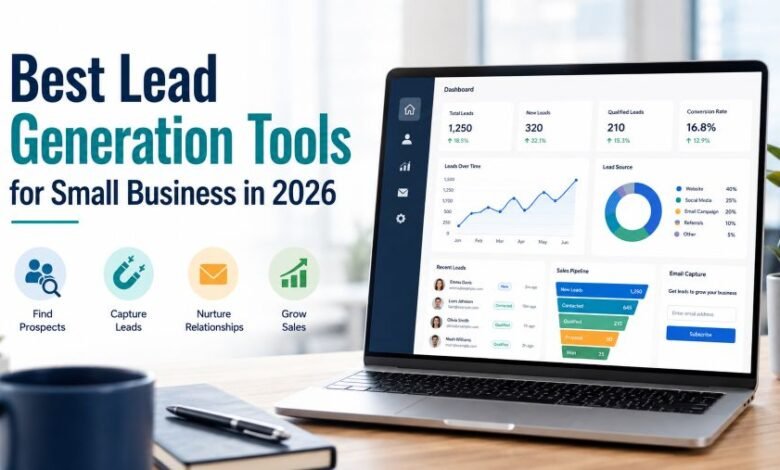
Best Lead Generation Tools for Small Business in 2026
A UK-focused guide to choosing practical software for capturing enquiries, nurturing prospects, managing sales pipelines and running B2B outreach.

Last Updated on August 22, 2026 by Business Blog Media Editorial Team
Introduction
Small businesses rarely need the tool with the longest feature list. They need a system that attracts the right prospects, records where they came from and makes follow-up simple enough for a small team to use consistently.
For most small businesses, HubSpot is the strongest starting point when CRM and inbound lead capture need to live together. Brevo is better for low-cost email nurturing, Mailchimp suits subscriber-led marketing, Pipedrive is stronger for sales-focused teams, and Apollo is designed for targeted B2B prospecting.
The best choice depends on how leads enter your business. A local consultancy collecting website enquiries needs a different setup from an agency building outbound prospect lists. This guide compares the tools on that basis, including free options, practical use cases and meaningful limitations.
Quick Facts
- HubSpot offers free CRM tools for up to two users, and its forms can create or update CRM records.
- Brevo’s free plan includes 300 email sends per day plus basic sales tools, including one pipeline and up to 50 open deals.
- Mailchimp says its landing pages are free to all users and can collect subscribers through signup forms.
- Pipedrive’s LeadBooster combines web forms, chatbot, live chat and prospecting, but it is not included with every lower-tier plan.
- Apollo combines B2B contact search with multichannel outreach sequences.
- UK PECR rules differ between corporate and individual subscribers; sole traders and some partnerships have stronger electronic-marketing protections.
- A publicly available email address does not automatically equal consent to direct marketing.
Quick Comparison
| Tool | Best For | Key Strength | Free Option | Main Limitation |
|---|---|---|---|---|
| HubSpot | CRM + inbound capture | Forms and CRM in one system | Yes | Advanced needs can require paid tiers |
| Brevo | Budget nurturing | Email plus basic sales tools | Yes | Daily free sending limit |
| Mailchimp | Audience growth | Forms, landing pages and segmentation | Yes | Less sales-pipeline focused |
| Pipedrive | Sales-led teams | Pipeline management + LeadBooster | Trial | Lead tools may require add-on/higher plan |
| Apollo | B2B outbound | Prospect data + sequences | Yes | Credits, data checks and compliance need attention |
Best Lead Generation Tools for Small Business
HubSpot: Best All-in-One Starting Point
HubSpot is the clearest fit when a business wants to capture leads and manage them without connecting several systems. Its forms can collect visitor details and create or update CRM records, while submissions can trigger follow-up actions. HubSpot currently offers free foundational tools for up to two users.
For a small consultancy, a quote-request form can send a prospect straight into the CRM instead of a spreadsheet. The key strength is continuity between capture and follow-up.
The trade-off is that HubSpot expands into a much larger platform. Check which automation, reporting and marketing functions require paid subscriptions before designing a process around them. Choose another tool if your main need is bulk email, dedicated pipeline selling or cold prospecting.
Brevo: Best for Affordable Nurturing
Brevo fits businesses that already attract leads but need a low-cost way to stay in touch. Its free plan currently allows 300 email sends per day and includes basic sales features. Brevo also lists one pipeline and up to 50 open deals among its free limits.
A small accountant or training provider could nurture enquiries by email while tracking active opportunities without immediately buying a separate CRM.
The strength is value across email and light sales management. The weakness is the free daily send cap, which can become inconvenient as an audience grows. Brevo is less compelling when a team needs sophisticated deal reporting or large-scale prospect discovery.
Mailchimp: Best for Simple Subscriber Growth
Mailchimp works well when lead generation mainly means turning website or campaign traffic into subscribers. Its landing pages are available to all users, and signup forms can add contacts to an audience. Landing-page subscribers can also be tagged for later segmentation.
A small ecommerce brand might create a landing page for an early-access list, tag new signups and continue the campaign from the same platform.
The advantage is simplicity for email-led audience building. The limitation is that Mailchimp is not primarily a sales pipeline system. Businesses with multiple reps, deal stages and high-value opportunities may prefer HubSpot or Pipedrive.
Pipedrive: Best for Sales-Focused Teams
Pipedrive is strongest when the business already thinks in deals, stages and next actions. Its LeadBooster package includes Chatbot, Live Chat, Web Forms and Prospector, and web-form submissions can be saved directly as leads or deals.
A small recruitment firm or B2B agency could collect enquiries from its site and move qualified prospects directly into a defined sales pipeline.
The main trade-off is packaging. LeadBooster is included in Premium and higher plans and can be added to Lite and Growth plans. That means buyers should price the workflow they actually need, not only the base CRM.
Pipedrive is a better fit than Mailchimp when disciplined follow-up matters more than newsletter marketing.
Apollo: Best for Targeted B2B Outbound
Apollo focuses on finding and contacting B2B prospects. Its current product information describes a database of more than 240 million contacts, more than 65 search filters and outreach sequences combining email, calls, social touches and tasks.
A three-person software agency could define a narrow ideal-customer profile, identify relevant decision-makers and place selected prospects into personalised sequences.
That speed is Apollo’s strength, but outbound prospecting brings extra risk. Credits affect usage, contact data should be checked, and poorly targeted automation can hurt deliverability and trust. Apollo’s documentation confirms that some prospecting and enrichment actions use credits.
UK businesses also need to distinguish between subscriber types. The ICO says unsolicited electronic marketing to corporate subscribers does not require PECR consent, but UK GDPR may still apply when personal data is processed. Sole traders and some partnerships are individual subscribers, where consent or an applicable soft opt-in is generally required.
Apollo therefore suits teams prepared to run narrow, compliant outreach rather than indiscriminate bulk campaigns.
How to Choose the Right Lead Generation Tool
Start with the lead source, not the brand. For website enquiries, prioritise forms, landing pages and CRM handoff. For existing leads, email automation matters more. A sales team handling high-value opportunities needs pipeline visibility. For outbound B2B, database quality, suppression controls, deliverability and legal compliance become central.
A common mistake is paying for overlapping tools before defining the workflow. A two-person agency may not need separate form, CRM, email and prospecting platforms. Start with the smallest stack that covers capture, ownership and follow-up; add a specialist tool only when a clear gap appears.
Free plans are usually enough when lead volume is low, workflows are simple and one or two people manage sales. Upgrade when sending limits, user caps, reporting or automation create manual work or missed opportunities.
If you combine tools, choose one system of record. Make sure consent, opt-outs and lead ownership stay synchronised. The ICO also makes clear that using a bulk-email provider does not transfer your PECR responsibility to the platform.
Trusted Resources
- HubSpot Knowledge Base and pricing pages: used to verify current form functionality, CRM integration and free-user information.
- Brevo Help Centre: used to verify free-plan sending and sales limits.
- Mailchimp Help Centre: used to verify landing pages, signup forms and tagging capabilities.
- Pipedrive Knowledge Base: used to verify LeadBooster components, web-form routing and plan availability.
- Apollo product documentation and Knowledge Base: used to verify prospecting data, sequences and credit-based usage.
- UK Information Commissioner’s Office: used for current PECR and UK GDPR guidance on electronic and B2B marketing.
Conclusion
There is no single winner for every small business. HubSpot is the strongest general starting point for inbound capture and CRM. Brevo is attractive for low-cost nurturing, Mailchimp suits subscriber-led campaigns, Pipedrive favours sales-pipeline discipline, and Apollo is built for targeted B2B prospecting.
Before buying, map one real lead from first contact to sale. Choose the tool that removes the most friction from that path, then check how it handles consent, opt-outs and ownership. That simple exercise is more useful than comparing dozens of features your team may never use.
Frequently Asked Questions
What is the best free lead generation tool for a small business?
HubSpot is a strong free starting point when forms and CRM need to work together. Brevo is attractive for email nurturing, while Mailchimp suits basic subscriber capture. The best free choice depends on whether your priority is capturing leads, contacting them or managing opportunities.
Can I use more than one lead generation tool?
Yes. Many businesses combine a CRM with an email or prospecting platform. The important part is keeping one system of record and preventing duplicate contacts, inconsistent unsubscribe status and unclear sales ownership.
Is Apollo suitable for small businesses?
Yes, especially for B2B companies with a clearly defined target customer. It is less useful for businesses relying mainly on inbound enquiries. Small teams should monitor credits, verify contact data and understand UK direct-marketing rules before automating outreach.
Is HubSpot better than Pipedrive for lead generation?
HubSpot is generally stronger for inbound forms, marketing and CRM in one platform. Pipedrive is usually better for teams that prioritise a clear deal pipeline and sales follow-up. The better option depends on what your team needs after a lead arrives.
Do UK businesses need consent for B2B cold email?
Not always. The ICO says PECR’s electronic-mail consent rule does not apply to corporate subscribers, although UK GDPR can still apply when personal data is used. Sole traders and some partnerships are individual subscribers and generally have stronger consent protections.